
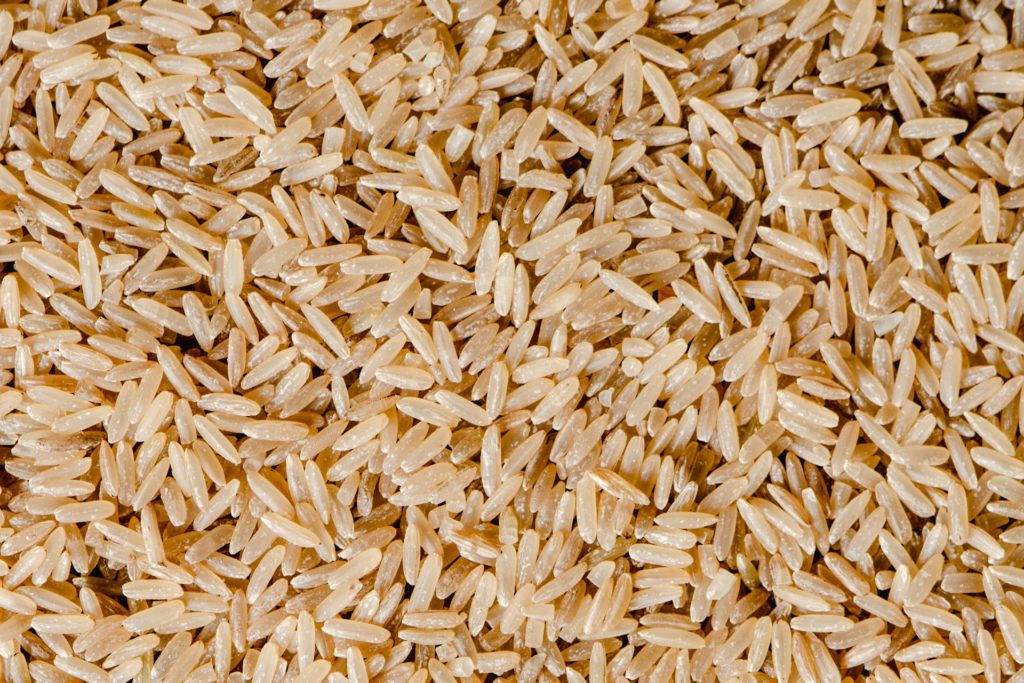
That is great to have a big container of brown rice in the fridge. Fresh or day-old rice, you can use it for curry, stir-fries, salads, or as a side dish. No worries if you do not have time to create a masterpiece dinner. Brown rice has a strong nutty flavor and is delicious on its own. Just top it with an egg and call it your fast breakfast!
Are you going to cook brown rice every day?
This is a well-known whole-grain nutrient. Its health benefits are priceless. The fiber that the brown rice contains in great numbers moves waste, prevents the appearance of blood clots, and lowers cholesterol. Believe it or not, comparing to white rice, brown rice is more useful.
But you cannot eat brown rice every day, day by day. No diet supports unvaried food. Enjoy brown rice a few times a week. Instead, you can eat other low-arsenic grains, such as barley or buckwheat.
What are the best ways to cook brown rice? There are a few, but the most common way to cook brown rice is essentially by boiling it in a pot for at least 45 minutes. Many consider this to be the best way to cook brown rice.
But you can use a rice cooker, slow cooker, oven, microwave and so on. Let us discuss more in detail below. Essentially, this blog article is seemingly turning into a mini manual on ways to cook brown rice.
BROWN RICE COOKING ESSENTIALS
The general feeling is that cooking brown rice is tricky. Even the best of the ways to cook brown rice cannot guarantee you a pot of ideal fluffy grains. Nevertheless, you can meet people who affirm that cooking brown rice is quite simple.
And you need minimum ingredients: brown rice, water, olive oil, and a pot. Keep the right proportion and your rice will never be mushy. Here are things you’d better learn before coming to cooking brown rice.
Pre-cooking
Is it necessary to wash brown rice? Why it is not necessary, there are a few reasons to wash rice before cooking:
Cleaning. First, do it for cleaning. Tap water will clean your grains, washing away dirt and dust and any small objects that you may not see it. Again, while I do not always wash brown rice before cooking, sometimes I feel like it is a good practice and do it.
Surprise, but one commenter on a forum said that worms bred in her brown rice container. Therefore, washing can remove worm eggs, if any.
Hydrating rice. Secondly, the brown rice is slightly dehydrated. It starts absorbing water already at that moment when you are washing it. Some commenters on forums are saying that brown rice tastes better if pre-washed. I think so too. When I have time – I wash it before cooking.
Removing starch. Finally, it removes some extra starch that can make brown rice mushy or sticky in the process of cooking. After washing brown rice, it does seem like rice grains come out more separate after cooking.
- Is it necessary to drain brown rice after rinsing?
Do not forget to drain your rice after washing. You do not want to pour washing water into the pot because that will defy the whole purpose of washing brown rice before cooking. Then, put brown rice in the pot you will use for cooking.
Cooking Brown Rice – Things You Need to Know
Is brown rice cooked the same as white rice?
The process is almost the same but there few differences.
- Brown rice cooks longer than white rice. Overall Brown rice takes 40 to 60 minutes to cook by boiling, with 45-50 minutes being the average.
- Therefore, the important difference is the water to rice ratio. Brown rice usually needs more water precisely because it absorbs more water over the longer time required for cooking it.
- Brown rice is richer in flavor than white rice and requires fewer spices and artificial flavoring.
- Brown rice is better for dieting, but that is the topic for another type of article.
Why does it take longer to cook brown rice?
Brown rice is a great alternative to white rice, but it takes more cooking time. The fact is that the grains of brown rice still has the outer layer what makes them harder and needs longer and slower cooking brown rice to allow water to penetrate the layer and boil the inside of each grain.
Why is your brown rice mushy?
It mostly depends on the amount of water you use. On the one hand, when you use too much water the brown rice will come out soft and mushy. I usually add half a teaspoon or teaspoon of olive oil and that helps to keep rice grains harder and more separated.
When you use less water for the brown rice the cooking time must be longer on lower heat and the result may be rather sticky.
You cannot fix mushy rice. But you can turn it into some other type of dish by mixing it with sweets or other staff.
BEST WAYS OF COOKING BROWN RICE DEPENDING ON ITS TYPE
COOKING BROWN RICE STOVETOP WAY
Cooking brown rice on a stovetop is still one of the most familiar and best ways to cook brown rice. In short, you put brown rice in a pot, add water, boil for 15-20 minutes if pre-soaked, for 45-60 minutes if brown rice was not pre-soaked, and then drain it.
However, cooking brown rice on the stove can also be done in several different ways. There are millions of nice recipes out there, so we are covering nuts and bolts for beginners here. Here we go!
Before cooking rice, decide what kind of brown rice you have. Did you know that brown basmati rice may cook longer than long grain or short grain brown rice? There are many nuances you should learn to cook a perfect dish. So, the brown rice cook time depends on its type. Just decide what type of rice you have got and cook it according to the recommendations below:
GENERAL RULE: For short-grain brown rice add 1 part of rice to about 2-2.5 parts of water. For long-grain brown rice add 1 part of rice to 2.5-3 parts of water, depending on the method you use. In short, long-grain brown rice needs more water because it absorbs more. Because, well, it is longer.
Generally, if you use a way of cooking brown rice that requires covering a saucepan or pot with a lid (absorption method), steam is trapped inside and you will need less water, than if you use a method that involves not covering lid (pure boiling method) when no lid means steam escapes and you must add more water right from the start.
How to cook brown rice using the easiest general method
I also call it mom’s method, or student method (because I used it as a student). Get a pot. A preferably tall one.
- Pour in 2.5-3 cups of water and 1 cup of brown rice.
- Drop a teaspoon of olive oil. Close the lid.
- Set heat on stovetop high heat and bring to a boil.
- Turn the heat down to a low setting.
- Simmer for 45-60 minutes. Check at least once and maybe stir once after 15 minutes.
- After 45-60 minutes check to see if rice is dry enough. If so, turn off the heat, close the lid and let it stand on the stovetop for another 10-15 minutes.
You can add salt or whatever in the process. But this is a basic way to cook brown rice.
Brown rice short grain
This type of rice is rather sticky I recommend using it for sushi rolls. It works well for rice puddings and similar desserts, as well as risotto.
Proportions: 1 cup rice, 2 and a half cups boiling water.
Cooking: 25 minutes of stove cooking after being soaked overnight. 45-60 minutes if take dries brown rice and just rinse it before cooking. You can also bake it for 70 minutes.
- Take 1-part (e.g., 1 cup) brown rice and soak overnight in 3–4-part (3-4 cups) water – it will absorb water.
- Put 1 part rice and 2-part water in the pot on the stove, add 1 teaspoon of olive oil, cover with the lid, and bring it all to boiling.
- Turn to low heat and simmer for 25 minutes.
- Turn off the heat and let it seat for another 10-15 minutes, cooling down. Do not remove the lid yet, because the rice will continue to self-cook in steam trapped by the lid.
- Enjoy your short-grain or long-grain brown rice.
Brown rice medium grain
When cooked using the method described above, it becomes moist and tender but still slightly sticky. Used for stir-fries, salads, side dishes, soups, puddings.
Proportions: 1 cup of rice, 2 cups of salted water.
Cooking: cook on stove 20-25 minutes, if previously soaked for at least four hours. Takes 45-50 minutes if you use dry rice without pre-soaking.
Brown rice long grain
Fluffy – grains do not stick together. It is great with saucy foods like stir-fries and gravies.
Proportions: 1 cup of rice, 2 cups of water.
Cooking: boil for 40-50 minutes if unsoaked. Also, can bake.
Basmati brown rice*
Fluffiest of all brown kinds of rice, traditionally associated with Indian and Middle Eastern food. It is served for curry and eaten with a spoon, fork.
Proportions: 1 cup of rice, 2 cups of water.
Cooking: Prepare as described above, then cook on low heat for about 15 minutes.
Differentiating rice by its type and using the right cooking proportions, your brown rice will be not come out overcooked and mushy, but with a perfectly cooked surface and the slight chew and fluffy that you love about brown rice.
1. Using the absorption method way to cook brown rice.
This easy way of cooking brown rice on the stove is the one that is most often used as it requires less time and gets a delicious result. Making rice by using this method, you throw in brown rice and water in a saucepan or pot and cook together over low heat with lead covered so the rice absorbs the water, and it is NOT drained.
This is how you may cook all white rice and Basmati brown rice. I like not to bother draining rice when I feel lazy.
- So, the absorption method involves adding water and rice to the saucepan.
- If you previously soaked your grains, you would add 1-1.5 cup of water and 1 cup of rice.
- If not soaked, you will add about 2 cups water and 1 cup of rice.
- Bring to a boil, and then, lower heat to a simmer and cover. Stir occasionally.
- Cook your brown rice on simmering heat on the stove for 25-45 minutes (depending on the type of rice, see above) for unsoaked and 15-20 minutes for soaked rice until water is completely absorbed.
Make sure rice soaked all the water. Once the water is absorbed, remove your brown rice from the heat, uncover, and allow to sit for 10 more minutes. You may use a fork to fluff the grains before serving. This rice is delicious in things like stir-fries, sushi, fried rice, stews, and more!
The difference between the absorption method of cooking brown rice and the regular boiling method is the cooking temperature.
When you use the absorption method you bring water with the rice in it to boiling and then you turn the heat down and simmer with lid covered, while rice slowly cooks and absorbs water.
Pure regular boiling means you bring water to a boil, THEN add rice to already boiling water, and you keep brown rice boiling on high heat, often without covering saucepan or pot with the lid, until there is no water in the saucepan or pot.
Plus, no need to drain after the absorption method, but regular boiling involves draining extra liquid if any is left. Boiling usually takes about 20%-25% less time to cook brown rice than the absorption method. I hope, this clarifies it.
This is the way to cook brown rice by absorption method. Store cooled leftovers covered in the special container in the fridge for 5 days.
Keeping your rice in a freezer, you can keep it for a month. Traditionally, you can reheat brown rice in the microwave or on the stovetop with a drop of oil or water.
WARNING!
It is not the best no easiest method for brown rice because of the following:
It can be difficult to achieve the right dish consistency. Also, perfecting timing may be the problem. Sometimes you can get brilliant fluffy rice if cooked with high-quality ingredients.
But sometimes, you will get an unpleasant result when using rice with a slimy or gummy surface. Just go with the recommendation about the right amount of water, pre-soaking, stove strength.
2. Rice Porridge method of cooking brown rice
Everyone knows that porridge is a dish that is made of oats or other cereals by boiling them on the stove. You can use milk or water to boil them in.
You should cook rice porridge by adding extra water when boiling it so that the cooked rice is saturated and disintegrates and the result is incredibly soft and pleasantly mushy.
Rice porridge is a popular breakfast food, also known as congee or gruel in Asian countries. As a rule, rice congee is served with many different side dishes.
So, here are the cooking essential steps to cook brown rice by rice porridge method.
- Heat the oil in a large pot, fry some garlic, ginger, mushrooms, anything you want to add to your dish.
- Add the rice and water (the stock is also used) and bring to a boil.
- For a cup of rice, you need 6-8 cups of water.
- Reduce to a simmer and cook, stirring occasionally to prevent the rice from sticking to the bottom.
- After about an hour (60 minutes), the thick congee is ready if it is soft and falls apart easily.
- If you soak brown rice overnight before cooking, brown rice porridge (pongee) will cook faster – in about 20 minutes.
- Let the rice sit in the saucepan or pot for 10-15 minutes with the lid closed on.
- Check if the rice reached the consistency of porridge and enjoy it.
The porridge (pongee) method is good if you want to add sweets, vanilla, milk, honey, chocolate cream, berries, cinnamon, jam, or other interesting staff to cooked rice porridge by mixing it before eating.
I would say that white rice seems better with sweets. And brown is better with more serious staff like spices or flavors added to it: vegetables or meats.
Whenever you are cooking rice by any way do not forget to stir occasionally to prevent the rice from sticking together or sticking to a pan or saucepan.
The more water you add – the softer and mushier it will be. And yes, you can also use broth, stock, or even add fruit juice to the liquid in which you are cooking it.
3. How to cook brown rice by the stir-frying method.
Stir-fry your grains in oil or fat before boiling! This method is very popular and used when making dishes like risotto, paella, or Spanish-style rice, so-called pilaf. So, the raw brown rice is stir-fried with different spices, herbs, and other chosen ingredients for the dish.
You can stir-fry it with meat, seafood, different vegetables BEFORE adding the right amount of water and covering the pot.
- It is better to rinse and soak your brown rice before cooking. Do not forget to drain it.
- Then, the brown rice is ready, and you do stir-fry for several minutes in a small amount of oil.
- After stir-frying, add water or stock to the pot, reduce the heat, cover, and let the rice absorb the liquid.
- As a rule, it does not take much time (10-15 minutes). Everything depends on how much water you add.
The brown rice cooked on the stove by using this method can be a bit chewy if it is slightly undercooked (which is the most preferred) or the texture can be softer and creamier if you add more water.
4. Boil & Drain or Pasta way to cook brown rice.
Somewhat like boiling, but it is a different way of cooking brown rice. It is recommended to cook your brown rice this way for medium grain, long-grain, and brown basmati rice.
How to cook brown rice like pasta? Here is a short overview. This method is based on the rapid high boiling that keeps the grains agitated so they do not stick together. This so-called hard and fast boiling way is perfect to cook through the tough, nutritious bran layer on the outside of brown rice.
How to cook brown rice like pasta?
- Pour your brown rice grains into the boiling water, always during this process keep the lid closed (in contrast to the regular fast boiling method),
- Boil on high uncovered until rice feels soft on the outside bat hard inside, or just chewy.
- The boiling time for medium grain and long grain brown rice is about 25-35 minutes. Boil your basmati brown rice for 15-20 minutes.
- Drain brown rice well.
- Put it into the dry pot on the lowest possible heat for 10 minutes. Lowest heat – to avoid burning rice, but just enough to steam out any remaining liquid. Give your dish 10 minutes to rest and fluff. Stir at least once. (Some cooks recommend at this point to not even put it back on the stove, but just let it sit on the tabletop with the lid closed. Try both ways, see which one works for you.)
- Remove from the stove and you may give it to rest another 10 minutes without any heat to absorb the remaining liquid or moisture.
For cooking extra fluffy rice by pasta method, you need to take 12 cups of water for 1 cup of rice to a boil in a large pot.
Once boiling, add rinsed rice and stir.
Then strain brown rice for 10 seconds and return to pot removed from the heat.
Cover the pot and let self-steam for 10 minutes.
Then the rice is ready to serve!
The rice cooked like pasta is delicious on its own or used in stir-fries, sushi, fried rice, with stews, and more! To conclude, you can hardly find a difference between the Boil & Drain method and cooking pasta.
But there is one thing to remember: resting. After the rice is drained, you will notice the grains are unpleasantly soggy.
When you return them to the pot and leave it covered for 10 minutes, the grains will absorb the excess water and transform into fluffy perfection!
Store cooled rice leftovers in a covered box in the refrigerator for up to 5-6 days. Reheat the rice in the microwave or on the stovetop with a little oil or water until warm.
WARNING
Why this recipe often is used incorrectly.
It is important to remove maximum excess water well when you drain the rice. If you have some water left in the pot, the dish will absorb that water and end up over-bloated. Also, make sure to put the pot back on the stove while the rice is resting, even if you chose the second way of completely turning off the heat.
But I would prefer to put it back on the lowest heat for 5-10 minutes with the lid closed. In any case, that low heat will work for you, helping the rice become perfectly dry.
- Why not cook brown rice like pasta: cons of pasta method
Some people may use this pasta method to cook brown rice in the wrong way. They just make water boil, then pour rice in, cook it whatever amount of time is written on the package, then remove the excess water.
They do not give the drained brown rice time to rest slowly simmering.
So, their rice will continue to absorb the liquid it is cooked in at a faster rate than pasta will. It becomes too mushy and steps into something closer to the absorption method. Always give your rice time to rest after you drained it for the pasta method.
Be careful and do not take more water than you need.
Brown rice is a tricky ingredient to cook. As the practice shows, your result varies and depends on the rice type, your location, the cookware you are using, the rice-water proportion, and the type of stove.
It can be always frustrating to try and fail with cooking a bowl of fluffy brown rice on the stove. Just keep the proportion of water and use one of the rice cooking methods, listed above, and you will master it.
Conclusion
Now that you know, you can choose your best ways of cooking brown rice. I suggest you start with the easiest method, and then move up to a more complicated methods described above.
Food is like art – you can experiment with cooking.