
Introduction to Use of Long Shelf Food for Emergency
Regular perishable food goes bad quickly, forcing another unnecessary trip to the store. Possibly, having to stand 3-4 hours in line just to get it because store lets limited number of shoppers at any given time.
Also, if power gets disconnected – regular food will perish without fridge.
By the way, on the other note, if you are interested in recent trend – Keto Diet – I incorporated olive oil (also long shelf life) in my diet based on Keto recs. But I digressed.
To avoid unnecessary grocery shopping trips it is suggested to start stocking up on dry and non-perishable food now, instead of doing it too late. When at the last moment local stores may temporarily run out of supplies and food, or when quarantine is imposed in your local community.
Long shelf life food is essential in the times of need. Even without disaster events – when you are in a rush, or too busy to cook, long shelf life food comes in handy.
I used food with long shelf life pretty heavily when I was a student and held two jobs at the same time, because food with a long shelf life also is usually pretty straightforward when it comes to cooking it.
But in the times of disasters, emergencies, or quarantines such food becomes a survival food with long shelf life. To avoid extra contact with other people, you can order it online.
You can order a stock of buckwheat, oats, dry fruit (contains nutrients and phytoestrogens) and other food on a few websites, including Amazon.
Many Uses of Helpful Long Shelf Foods
Without any further time-wasting, here foods to stock up. Foods that can last exceptionally long. Below, I will lay out food with longest shelf life. They are also solid quarantine food ideas for your quarantine foods list.
This post is 100% applicable to almost any emergency food list out there. Therefore, let us call it a survival food list.
Some of these dry foods can last up to 10-30(!) years when unopened.
Therefore, even if you do not get caught up in emergency, you can still eat these foods in 2-3 years. Yes, based on the rate of spread this whole ordeal can last up to 2-3 years.
Do not panic – prepare.
I totally recommend to always keep plastic box of decent size, where you should keep at least 8-10 packs of dry food like dry grains, 8-10 cans with canned food with meat and fish, and 5-10 canned soups and veggies, including beans (definitely a must have).
Also, some salt, some sugar, some flavoring, a few gallons of water, a good good sharp knife, can opener, forks, spoons, napkins, disposable plates and cups, and some disposable spoons, forks and knifes (in the even you get sick, so that you would not infect your family members through plates), etc.
You can do cardboard box, if you want, but plastic container seals better and prevents oxygen and moisture from getting to your food supply.
Also, have some frozen foods in your fridge – these must be consumed first, once the need arises.
Always keep such box, and periodically eat staff in it and replenish. Here is why – even if natural or man-made disaster does not occur – what if you get sick for a 3-7 days and must stay at home? Say, bad flu? What if, God forbid, you get temporarily injured and must stay home for a week?
You may not be able to go to the store and having such food stash will be SOOO helpful and will make you happy.
If something happens, even if you get sick, have some non perishable food – dry food with long shelf life and canned food with long shelf life. You will not have to suffer trying to get to the store, and will not have to ask friends to go and get it for you.
Just go to get to the kitchen, open, cook quickly, and I have meals for 2-3 days without necessity of cooking again.
The Basic Options List:
Here is my list which I use on regular basis to replenish my own food stock.
- Water (commercially bottled water)
- Cereals
- Oats
- Dry beans
- Pasta
- White rice
- Brown rice
- Buckwheat
- Barley
- Some potatoes
- Non-perishable pasteurized milk
- Dried fruit
- Some nuts
- Olive oil
- Salt
- Sugar
- Flour
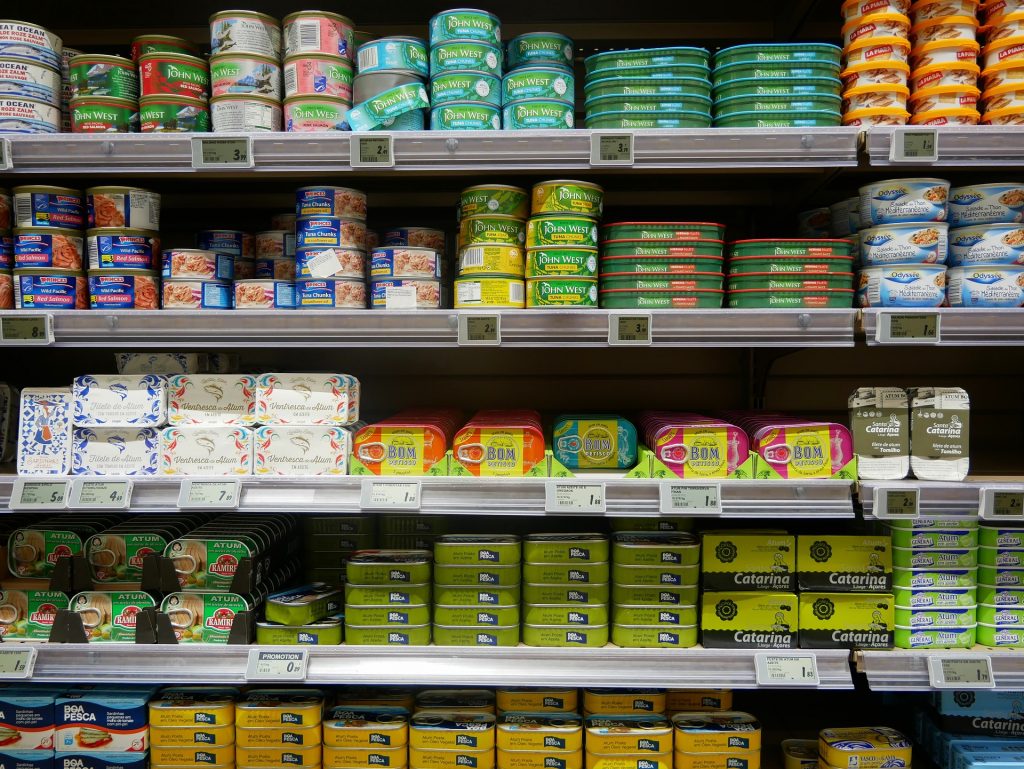
- Canned meats
- Canned fish (salmon or sardines or tuna)
- Canned vegetables (beans, beets, carrots)
- Canned soups
- Canned fruits (Applesause)
- Canned juices
- Frozen meats
- Frozen fish
- Frozen vegetables
- Frozen juices
- Protein bars – 10
- Vitamins, including vitamin C and vitamin D as well as Zink (good against pathogens – bacteria and viruses).
- Anti-cold medicines (mostly liquid or powdered ones)
Looks like a lot of staff on the list, and some other missing. I will add later. You do not need to buy few packs of each of the items above, just make sure you have some from each category – dry grains, canned food, frozen food. Whatever you like to eat.
Dry grains are cheap.
Watch out for rice – people with diabetes cannot eat rice.
Good knife is a must have item. A can opener too.
How Much Long-Lasting Food Should I Prepare?
I think a stash of 1-3 months’ worth of food that lasts very long is probably the safest bet when planning your resources.
Also, even if you have to self-quarantine for only 2-3 weeks, you can still stock up for a month and feel comfortable that you will not run out of food and water.
In the event of emergency or quarantine – what is one of the most critical supplies for survival is food and water. Because we cannot live without those.
OK, if you are low on budget, or a student in a small apartment – you cannot keep all that at home. So, just by enough to last a 5-7 days from my own list above.
I remind you that dry grains are the cheapest long shelf life nonperishable food items and they do not take much space because they require water to be cooked and expand in size.
Side note: Which Cookware to Use?
Side note: Which Cookware to Use?
Cookware (pots, pans, etc.,) which you use can make a big difference in final product. Many do not realize that better cookware results in better and more thoroughly cooked food. That, in its turn, leads to longer shelf life of the food – you can store it longer than.
So, why do you need to use good quality cookware vs. regular cheap staff? I did not realize this myself, until I started using more expensive staff – and I cannot go back to cheap cookware simply because I feel the difference. and it is HUGE.
Good Cookware:
- Food cooks better and more thoroughly, increasing shelf life of prepared food.
- Cooks food FASTER, resulting in using less energy for electric stoves and less gas for gas stoves. I used my MBA knowledge and did a rough calculation. I found that due to energy savings, good cookware may save a household anywhere from $500.00 to $2000.00 in energy/gas cost over the average 10-year lifespan of that cookware! And for large families, with more cooking – that number can be even higher.
- I found it easier to wash and clean good-quality cookware, compare to regular products – things stick less. That results in noticeable water savings over the long term.
You need at least one excellent quality recommended cookware set. Some of them are made in USA, using steel produced in USA by US companies hiring US workers. Others can be made in China or in the country of your location.
They are not too expensive too – for less than $199-$399 you can get a very decent set of good quality. And it will serve you for 7-15 years, or even longer.
SIDE NOTE: Some of us do not like to spend time at the stove cooking food. We want easy solutions. Here is easy solution – small kitchen appliances that cook for you!
I have published a list of several recommended small kitchen appliances which make cooking much easier. They do most or all of the cooking for you! It is set it and forget it situation.
LIST OF RECOMMENDED FOODS WITH LONG SHELF LIFE
NON-PERISHABLE DRY FOODS: GRAINS AND OTHER
I will start with grains and other long-shelf life dry foods, and I will mention dry food shelf life too for most items. Grains require some preparation and cooking, usually boiling. If you need real emergency food which requires very little of cooking or preparation – I will post a separate article for that.
So, dry grains.
Advantages:
- Relatively cheap and can be purchased in bulk quantities
- Very long shelf life (3-30 years)
- Preservation of nutrients for a long period of time
- Natural, without added sodium or sugar.
- Dry food is a good survival food and is often the food with the longest shelf life.
Disadvantages:
- Require cooking or preparation for consumption (but not all of them).
But, it is easy to cook these and they are very nutritious and healthy.
Usually, you would have to boil them, which you can do even if your apartment or house looses power or gas. You can cook outside – just a fire and a pot with water.
If you have vacuum sealer and can vacuum seal – this would be the best for storing dry grains. Most stored foods are best stored in the absence of oxygen and light. According to research, best packing choices are #10 cans are #10 cans or Mylar-type bags.
Canning jars are suitable for smaller quantities providing the jars are stored in a dark place.
Oxygen absorbers or vacuum packagers should be used to remove oxygen from the packages to extend shelf life and minimize off-flavors. https://extension.usu.edu/foodstorage/howdoi/dry_beans
Your quarantine prep or quarantine preparedness by way of building up quarantine or emergency food supplies will not be complete without dry stocking up on long shelf life grains or seeds.
Whether you prepare pandemic coronavirus food stock, or just cheap non perishable food long lasting food for other emergency food supply – dry grains are make excellent emergency food ideas.
Plus, they answer to common question of how how to stockpile food on a budget. Stock up on dry grain foods and save money and pain later.
Dry grains are cheap food to buy when broke and you can make cheap food to buy when broke with them.
Cereals Are the Easiest Choice of Tasty Food to Stockpile
Although I would not call cereal a survival food per se, dry cereal and granola have been the easiest non-perishable food choice for generations.
Advantages:
- Super-Easy to prepare
- Often healthy
- Easy to store
- Easy to transport
- Easy to buy
- Are good to eat 6-8 months beyond expiration date
Disadvantages:
- Often contain sugar
- Kind of expensive unless buying in bulk
Well, cereals are super easy to prepare just by adding water or milk, including dissolved dry milk. Once you add liquid, they immediately start absorbing liquid and in 3-5 minutes you have a nice easy yummy long shelf life food meal to start your day.
Cereals do not contain much protein. But they often do contain many nutrients. Try to buy ones with low sugar or without sugar – they are much healthier than ones containing lots of sugar.
Try to buy ones already individually packaged by manufacturer – they last longer if unopened.
In fact, some of the types sold in bulk in plastic buckets (I will post links) have storing shelf life for up to 20 years!
Just make sure to store cereals, like most other long shelf life foods, in dry, dark place, at about 75 degrees (if possible) without direct exposure to sunlight, in a tightly closed or sealed pantry.
OATS Are an Easy Survival Food Long Shelf Life
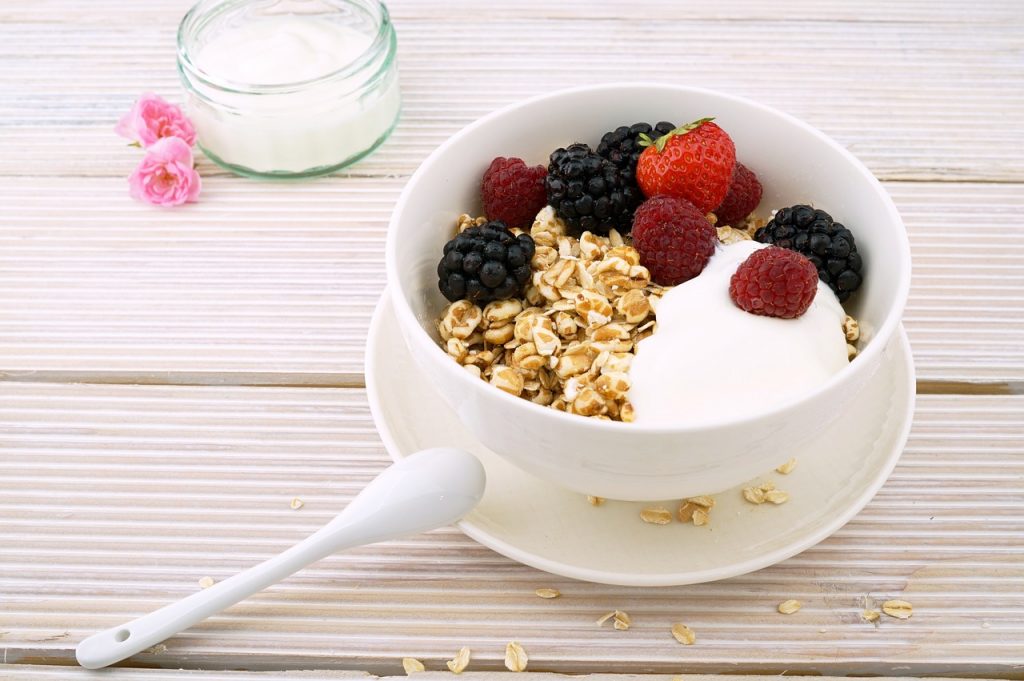
Why Oats is my first choice?
- They are healthy and good for the heart
- They do not contain gluten
- They are tasty
- They are easy to cook
- They can be prepared as a meal without cooking
- They are relatively cheap
- They are easy to find
- They are good for adults and for children
- They are in the top of healthy non perishable foods and can remain good for a long time (1-3 years at least)
Oats are relatively cheap, and are the answer for most pressing question – how to stockpile food on a budget?
The survival food oats is among one of those dry food shelf life choices that do not require much thinking.
Although, oats are not food with the longest shelf life, they still last long enough and have lots of health benefits to justify stockpiling.
It is a good non perishable healthy food, usually is included by specialists in the long life foods for emergencies.
Oats contain bunch of nutrients and vitamins – from B vitamins, magnesium, zink, potassium to proteins. Although, oats is not a major source of protein.
Oats contain mostly healthy fat, which is necessary for our bodies to produce energy.
The verdict is that oats is a food to stockpile.
Stock up on quick or instant oats and make oatmeal. In the unlikely event that your gas and/or electricity will be shut off – oats prefer, but do not require, cooking! If you do not have a backyard or a place to cook – oats are an excellent choice.
- All you will need to do is to put oats in the pot.
- Pour in enough water at oats-to-water ratio 2-to-1.
- Leave them alone for a few hours. Preferably on the hot sun, if any, or in a warm place.
- And they will absorb the water and become eatable.
- Not perfect, but eatable.
- Add a little bit of olive oil to that for better digestion, and you can survive for weeks or even months.
- Quick and easy – does not require much of your time. I ate it when I was doing college exams – for lack of time and for being lazy.
Add some dry fruit, honey or jelly – and you have a different flavor each time.
If you have a backyard where you can cook, then it is easy to cook oats – they cook fast and save wood or fuel.
If you don’t – you can buy some equipment for gas fire cooking on the balcony of an apartment building, if they allow it in your building.
Just make sure you have water or little fire extinguisher nearby to make sure you do not burn down the whole building.
The following links are selected by me and served by Amazon.
You can choose any of these that suit your liking.
And yes, if unopened, left in original packaging by manufacturer, oats can last for years or even decades, despite manufacturer’s suggested 2-4 years shelf life.
Pasta is an Obvious Long Shelf Life Food Choice
The first obvious choice is pasta. Although, this is not my favorite because I do not like gluten. Plus, too many carbs. You can counter that with throwing in some canned meat, fish, chicken or egg protein to make sure you emergency or quarantine diet is not only carbs.
But, pasta is a great choice because it is easy and fast to cook, tasty, and filling. You can try wheat, but also may try bean-based or corn-based variety if you are intolerant to gluten. About 10 pounds of pasta may be enough for a family of 4 for 30 days, Plan accordingly.
And, do not forget about sauce. Either buy sufficient quantity of canned sauce, or you can buy canned tomatoes and mash them to make sauce for pasta.
You can throw into pasta some cheese, some meatballs (canned too), mix with pieces of meat from your canned meat, and this will make a solid dinner.
Pasta has long-shelf life, so stock up on it. Also, it does not take much space.
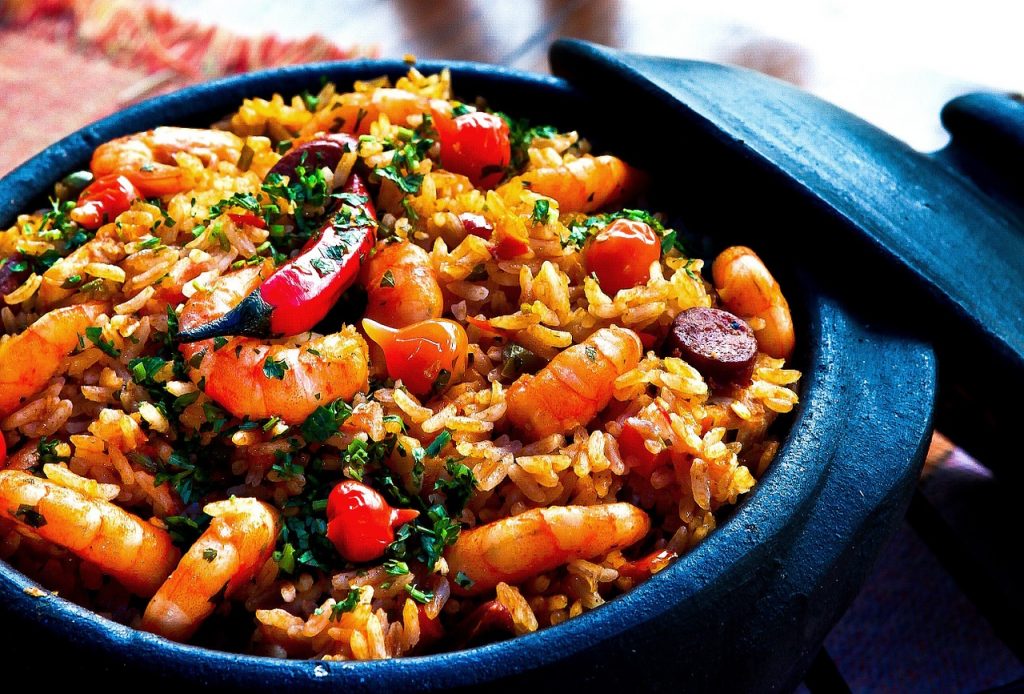
White and Brown Rice as Food Product That Lasts Long
Rice is another non-perishable food with long shelf life and is on my quarantine food list. Rice is solid non perishable healthy food to stockpile.
Advantages:
- Cheap non perishable healthy food to stockpile
- Healthy (brown rice)
- Food with long shelf life
- White rice may well be among food with longest shelf life
- Easy to cook (white rice)
Disadvantages:
- Long cooking time (brown rice)
- Shorter shelf life than many other grains (brown rice only)
But I suggest stocking up only on brown rice because white rice is a bleached rice with added artificial (synthetic) vitamins.
Brown rice, on the other hand, is not bleached, and contains its natural nutrients, vitamins and minerals. Rice with a long shelf life is a great survival food.
Brown rice is high in protein and good calories. Eaten together with beans it makes up complete vegetable protein.
However, unlike white rice, brown rice takes long time to cook. You will need to bpil it for 30-60 minutes for before it is ready and soft enough for consumption. If your electricity is out, then cooking rice make take more precious resources than, say, pasta or even white rice. You can also stock up a little bit on long grain white rice for that reason.
You can also stock up on brown rice hot cereal – a specially formulated brown rice meal for faster cooking – 10 to 15 minutes of boiling time.
Just like any other long shelf life food rice requires certain degree of care while in storage – lack of light, oxygen and moderate temperature.
Now, officially, shelf life for brown rice is 6 to 12 months. Storing brown rice in a fridge or refrigerator can increase brown rice shelf life to almost 1/5-2 years.
If you see that rice goes rancid, musty, discolored, oily, mushy, stuck together, moldy, smelly, then throw it out. What rice and other dry grains do not really like is water. Keep them dry.
But, if your keep brown rice well past even two years and it did not change color, structure, looks good, smells good (carefully inspect it), then it should be still good for cooking and eating.
White, wild, jasmine, basmati rice, on the other hand, because it is bleached, contains synthetic vitamins, can last up to 15 to 50 years, when stored properly. That is quite a difference and therefore I suggest stocking up on both brown and white rice. For this difference, rice does not make a top of my list for stockpiling, but it is still something that I always try to keep at my home for emergencies or just for regular consumption.
With the reservations above, Rice is a cautiously good candidate for your emergency food pantry and is an excellent choice for including in one month food supply list to wait out in the times of quarantines or emergencies which cause some disruptions for food supply in local area.
Otherwise, white rice deserves its place among long lasting food items because it may well be among food with longest shelf life and is a choice food to stockpile.
Dry Beans the Long-Lasting Food Choice of Generations
Beans are not just another food with a long shelf life. it is really a food for all times and occasions.
Advantages
- Inexpensive to buy in bulk
- Solid protein content
Disadvantages
- None, really, except for shorter shelf life
- Some people do not digest them too well (but most do fine)
Generations of our great-great grandparents survived on beans at some point in their lives, because beans are nutritious and easy to store.
Beans are seed crops (not grains). Dry beans are an excellent source of proteins. They contain up to 22% of protein in them – far higher than pretty much any other dry grain or seed crops. Dry beans with brown rice in one meal make complete vegetarian protein.
Dry food shelf life for beans is relatively medium. and it is not a food with longest shelf life. But beans are good survival food and nice food to stockpile and must be on your survival list. Even for regular non-emergency meals it is good food to store because it is long shelf life food.
Regular beans stored in normal polyethylene (food-grade) bags last about 3-4 years. Best beans are those that are sealed with oxygen absorber and they can last for 4-6 years. If you store them longer than that, they will start losing its nutrients and vitamins and will become harder to cook and to eat.
Research suggests that beans lose most vitamins after approximately five years. Storage at warm temperatures will accelerate vitamin degradation. But most carbs, proteins and minerals should remain for a longer time https://extension.usu.edu/foodstorage/howdoi/dry_beans
If you want to try to store them longer, if you purchased regular non-sealed above type in grocery store then you can put them in a freezer bag or airtight container, preliminary, squeezing out as much air as possible, and tightly closing.
Sealing beans with vacuum sealer may significantly extend their storage life. Dark and white beans are better stored then pinto beans.
Some companies do make awfully long shelf life beans specifically for emergencies. Such beans, while losing vitamin content, otherwise can last up to a decade or even decades.
Because some people do not digest beans too well, I recommend try to cook and eat some now to see if you can survive on beans food.
As with any dry food, adding some olive oil for digestion. is recommended
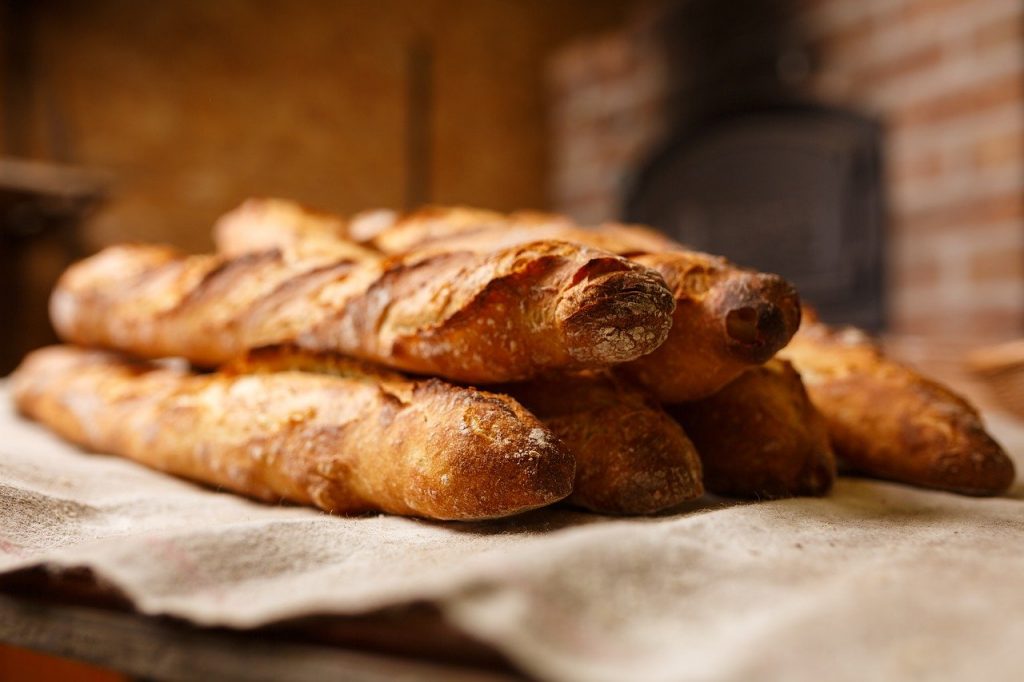
Buckwheat: A Grain Food with Long Shelf Life
Buckwheat. Not the favorite food of many and it is allegedly fed to horses in some countries. Well, if it is good for working horse, it may be good for me.
If I want to stockpile food – a non perishable healthy food, or survival food, or coronavirus food, or food for quarantine, or emergency food supply, or just simply food with a long shelf life, buckwheat is always on my list.
Maybe I am biased because my grandma used to cook buckwheat and made some meals with buckwheat. Or, maybe I am just too lazy to cook.
Advantages:
- Can be purchased in bulk
- Not too expensive
- Gluten-free
Disadvantages:
- Not super long shelf life
- Probably is sold not in every store
Buckwheat is a hard grain and can be stored for a long time. Buckwheat has good shelf life. Buckwheat keeps all of its original nutrients, minerals and vitamins. It has some protein in it, although, not as much as in beans.
Still, it can have up to 10-11% protein content and contains all 8 essential proteins, including lysine.
Buckwheat goes well with meat. It contains no gluten and is a good choice for those with gluten intolerance.
By the way, buckwheat can be grinded down to flower and used instead of regular flower.
Yes, buckwheat can be kosher for those orthodox who require kosher food.
I prepare buckwheat on regular basis. Maybe, it is just me. But it is easy and quick to cook – boiling for only 15 minutes. Then I can pour milk on it, and have auick protein-grain meal in one dish.
It is not too popular in the US, but it is grown and is widely popular in Poland, Ukraine, Russia and China.
Buckwheat can be boiled, put in soup, used in cereals, used as flower for pancakes, and much more.
Buckwheat contains some oils and therefor emergency food supply 3 months e once opened, it cannot be stored for too long. Unless, it is packaged using oxygen remover or vacuum packing, or stored in a well-sealed container. Then buckwheat can have long storage life.
Another tip. Shelled buckwheat can be stored for years. Buckwheat with shell removed – it depends on how airtight container is. Mostly it is sold with shell removed. I have seen buckwheat stored for up to 10-12 years and it still was good enough to eat. I have heard some claims it can be good even after 20-25 years of storage, but I was not the witness of that.
Still, it is a good choice for quarantine prep and is on my emergency food supply list. It is in my emergency food pantry.
Barley is Also a Long Shelf Life Food
Barley has lots of nutrients, just lots of them. And barley is cheap. Barley is excellent food with long shelf life that can be used on its own or in soups and stews. Barley is a biological relative of rice. It is a good non perishable food. It is also healthy non perishable food.
By the way, barley lowers cholesterol for up to 20%. It is used for feeding livestock and making a beer.
Some blog posts I have read suggest that Barley can be stored for as long as 24 months, but I call that a bull.
And unopened barley can have a shelf life of up to 8 to 10 years. It is opened barley that has shelf life of only 18 to 24 months.
As usual, store it in a dry, cool place in a good airtight food storage container.
Despite the fact that barley is not food with the longest shelf life, its shelf and storage life is sufficient enough so that Barley should be put on your a non perishable food list.
Again, you may want to purchase them in #10 sealed cans to store grains including barley. Generally, like all grains, keep barley in tightly sealed plastic containers or glass jars.