
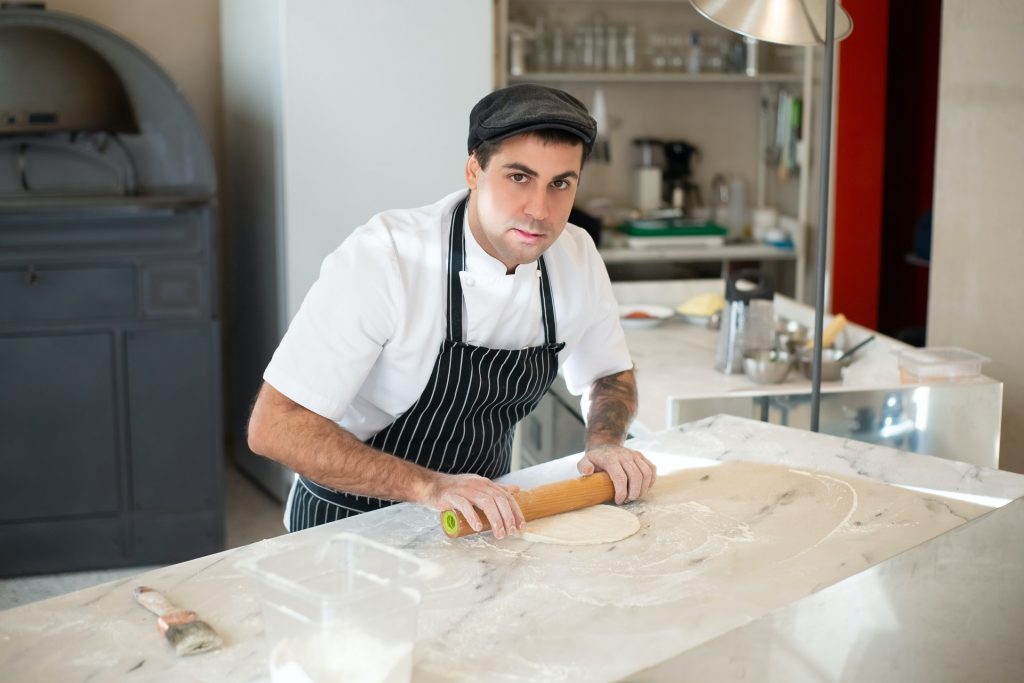
The dough is the core of a pizza. How well you knead pizza dough makes all the difference in the pizza. It should not be too thick or thin but ideally chewy. It should result in a crispy crust and delicious as it can sag somewhat due to toppings or slide off.
Kneading the pizza dough to the right time and combining the dough ingredients to appropriate quantities results in the perfect dough. Here are most effective methods to knead pizza dough.
What is kneading the dough?
Kneading is mixing the dough but it is a more effortful way of doing it. Kneading pizza dough should be done on a work surface. Kneading is primarily done to improve the dough texture, stretchiness, and strength.
Kneading the dough is done to:
- Evenly mix the ingredients
- To strengthen the gluten strands.
To hydrate the flour.
The science behind kneading the pizza dough.
If you can understand the science behind kneading, you will know why kneading is essential and to the right amount to get the right pizza dough. The kneading process involves altering the molecular structure of the dough’s gluten strengthening structure and the strength of the dough.
Gluten of the wheat flour comprises of proteins called glutenin and gliadin. When the dough ingredients are initially combined, the proteins are knotted and arranged chaotically following no order.
When you knead, the proteins gradually line up and create an amino acid chain. They form a matrix in the pizza dough permitting the pizza dough to rise.
This makes the dough chewy, perfect texture, and soft which otherwise can be like a hardboard. The softness is due to gas within the dough due to yeast.
How to Knead Pizza Dough?
To make a soft stretch pizza, you will need the following ingredients:
- All-purpose flour/Wheat flour-4 cups/500g (17.6 ounces)
- Water-1-1/3 cups/300ml (10.1 ounces)
- Salt-1tbsp/10g (0.35 ounces)
- Olive oil-1tbsp/20g (0.7 ounces) – 2 tablespoons
- Dry yeast-7g (less than 1 tablespoon) or Fresh yeast-20g – – 2 tablespoons
(Sorry if measures seem complicated – we have North American and European readers on this blog)
How to know my kneading is enough?
To know if your kneading is sufficient, press your finger into the dough, it should spring back. The other test is when you pull the dough; if it tears up then a little more kneading is needed. If you stretch the dough, you should be able to see through it, if kneaded right. This is also called the windowpane test. When sufficient kneading is done, the pizza dough is ready and rises right.
How much time is needed to knead a pizza dough right?
Pizza dough generally requires about 10 minutes to 12 minutes of kneading with hand. It involves rolling and pressing back and forth using your palm area of your hands. It is also called the rock n roll method.
If you are making use of a stand mixer and making pizza dough with a hook, then it will need about 8 minutes to 10 minutes of kneading. This time is approximate and results in a stretchy and velvety smooth dough.
Kneading times can be known precisely based on the ingredients used, flour type, and the technique that you are using for kneading. High protein flour may not need as much kneading as low protein flour.
A right kneading can be assessed with the following features in the dough:
- The dough has no lumps and is very smooth in texture.
- The dough is less sticky.
- The dough stretches without tearing/ripping.
- The dough holds its shape well.
- The dough passes the windowpane test.
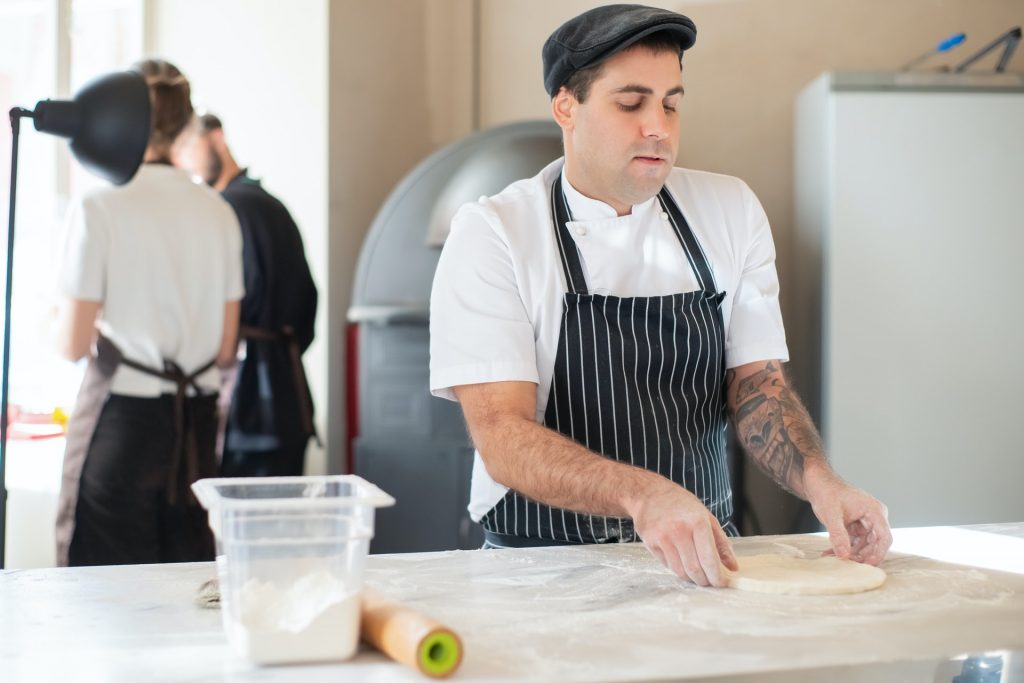
Different methods on how to knead pizza dough.
You can knead pizza dough using different methods. Follow the steps below for different methods to get well-kneaded pizza dough.
Mixing Method
- Take water and warm it to around 38 deg C. It should be warm when you touch it.
- Take yeast and mix it in water and then add in oil.
- Blend it using a whisk for even smooth mixing.
- Take flour and sift it to let out lumps into a mixing bowl.
- Add in salt and mix it.
- Make a well in the center of the flour hill.
- Now pour the yeast water mix in.
- Take a wooden spoon and churn it to make the dough.
The process
Pizza dough can be prepared using a dough hook in a mixer or by using a hand. Once you have dry and wet ingredients in hand, mix them as in the mixing method. Transfer this pizza dough onto the work surface. The dough should not be sticky, but a little moist.
Pizza dough is kneaded with 3 primary steps:
- Fold
- Push
- Turn
Step 1-Fold-Lift the pizza dough and fold the dough over and onto itself.
Step 2- Push-Push down and then using the heels of the hand and palms of your hand move forward to the middle of the dough mass.
Step 3- Turn-Give the dough a quarter turn and turn it always to the same side.
The kneading and turning should be repeated. Whenever the dough sticks, use a scraper and scrape it up. Lightly flour the counter or the work surface and repeat the process. The entire process should be elastic and smooth.
Once the mixing step is done, one can knead pizza dough using different methods.
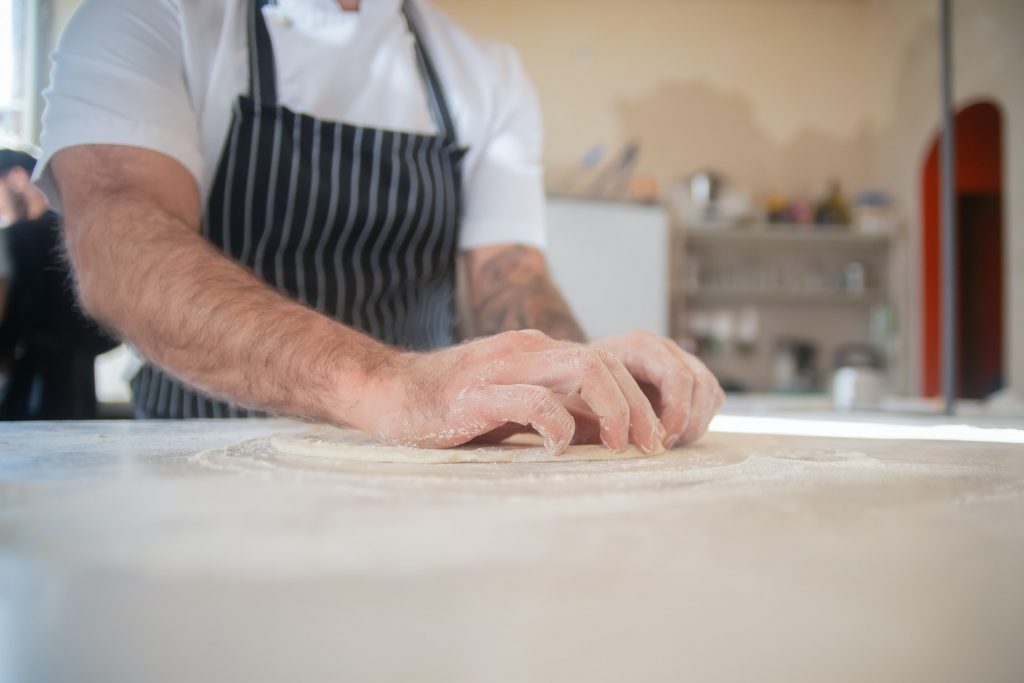
Hand kneading pizza dough
Hand kneading is a traditional way of making pizza and it can be daunting for many. However, with worked up dough, the flour protein lined up with each other creating gluten strings. The protein level within the flour determines the pizza dough fineness. The higher it is, the stronger and better the gluten strings are. This becomes strong flour.
Steps to be followed:
- Take the pizza dough obtained from the mixing method to a work surface after flouring it lightly.
- If you find the dough sticking then dust it above as well.
- Now, it’s time to knead. There is no right method to knead as each of them prefers their own. However, the most preferred type is to use the heel or palm of your hand to press first and then roll the pizza dough across the work surface.
- Now make use of your other palm and repeat the process along with folding it over simultaneously.
- Repeat the process for about 3 minutes to 5 minutes.
- Knead the pizza dough on the lightly floured surface around 20 times to 30 times to get that velvety texture.
- Your pizza dough is ready now.
- Check the pizza dough by pressing it with your finger to rise back or the windowpane test.
The resultant pizza dough should not be sticky, be stretchy and be velvety smooth in texture. Remember not to overwork the dough beyond this point. It can make the dough over velvety and the gluten over-strengthened. It becomes difficult to work with such dough.
Key features of hand kneading
- Making use of your hands will permit you to feel the dough and analyze the right kneading with the feel.
- Hand kneading needs more physical effort and stretch, rock, press, and roll technique.
- An effort filled work but gives a traditional dough making.
- Kneading by hand needs no equipment and a cheaper way to do it with a traditional touch.
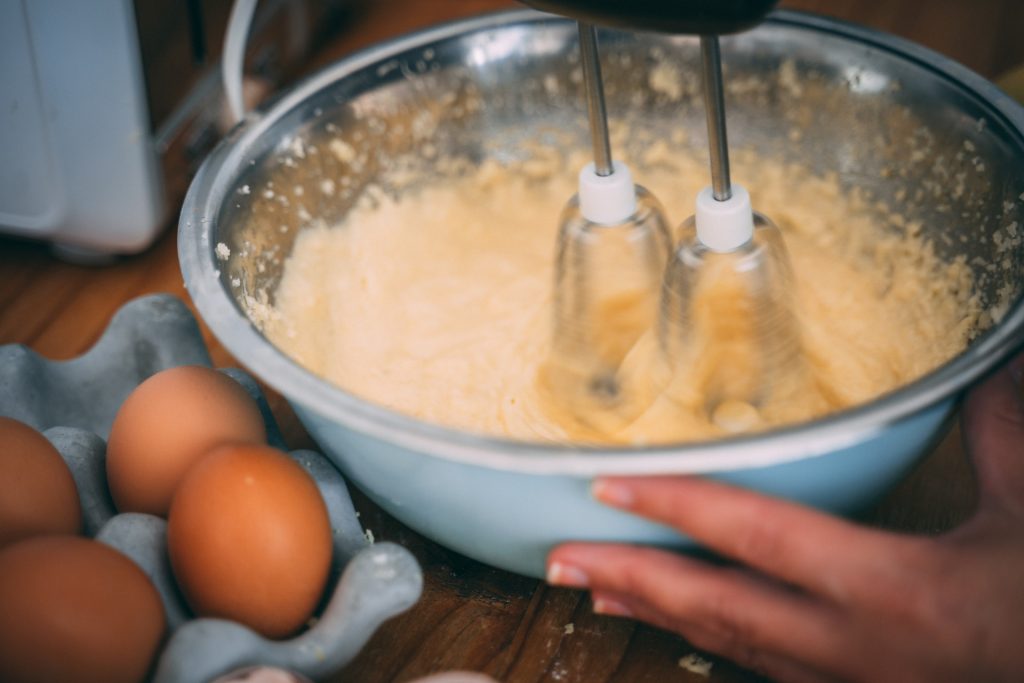
Kneading pizza dough using a stand mixer
Stand mixers come in different mileages and types. With different flours, you may need a little experimenting. A standard stand mixer comes with a metal bowl and a dough hook. You can skip the mixing method mentioned above if you are planning to knead pizza dough with a mixer.
Steps to be followed
- Take all the ingredients mentioned above and put them in the mixer bowl and mix it.
- Operate the mixer on mid-speed for the ingredients to mix up evenly. Mix them for about 30 to 60 seconds.
- Turn down the mixer to a lesser speed and let it run for around 3 mins.
- Post this time, turn off and check for the dough consistency. Ensure the dough not sticking to the mixer walls. When you touch the dough, it should give you a putty-like velvety feel it.
- Let the dough stand in the bowl and rest for around 20 mins. Place the cover to prevent the dough from drying out.
- Once the dough is rested enough, remove it over a lightly floured surface.
- Using your hand, knead it for around 20 minutes to 30 minutes.
Pizza dough can be easily overworked in a mixer, so be careful of the consistency. Ensure the dough to be checked with a finger or windowpane test for the right amount of kneading.
Key aspects of using a mixer
- Making use of a mixer will minimize the time spent in handling the pizza dough.
- Mixers will need lesser physical strength or kneading technique. Kneading is done after the mixing is done and the time required is lesser as compared to hand kneading.
- It is easier to knead the dough mixed in the mixer.
Mixers are expensive, heavy, and bulky but make the effort easier.
Kneading technique summarized
You pull the dough and fold the back of the pizza dough up and over the front side. After this, you push it across you with the heel of your hand. Post this, you give the dough a quarter turn. Repeat this process of the fold, push and turn. Knead rhythmically until the dough turns smooth and stretchy.
Signs of under-kneaded dough
- Flopping dough
- Easily tears off
- Looked ragged
Signs of well-kneaded dough
- Well holding shape
- Bounces back fast upon poking
- See-through stretch
Proofing
After the above steps, you might think kneading is done. However, you need to proof the dough. The dough is filled with airiness by turning the yeast into sugars, alcohol, and carbon dioxide. These bubbles stretch the flour gluten without which the pizza can get harder.
To prove, you cover the dough with a kitchen towel or a cling film. Let it triple or double the size. Place this container into a warm place for about one or one and a half hour generally. You can divide them into smaller balls and cover them up.
Post proof knead
Once the proofing is done, the dough doubles or triples the size. Post proof knead is folding the sized ball into itself. This can be done by holding the dough ball and bringing the dough sides towards the middle downsides and pushing them in. Turn them 90 degrees and repeat this folding technique on all the sides. The process can be repeated some times. The dough can be covered back with the cling film and keep in a warm place for another 60 minutes to 90 minutes. You can store this dough ball in the freezer for two days.
Which kneading method is preferable?
Kneading by hand is recommended to begin with as it gives you a feel for your pizza dough. You will get a hang of handling it to the right kneading and time. You will be able to learn quickly the aspects of what makes the right pizza dough.
Once you get the hang of it, a mixer can come in handy as now you know how much time to mix and with the feel of the dough, assess the kneading.
Do we knead the pizza dough after resting?
As mentioned above, kneading is done after proofing the dough as well. Knead the pizza dough for 10 minutes after mixing and placing it on a lightly floured surface. After this let it rest for short rising. Punch the dough down and knead it post proofing and let it rest.
You can throw the dough in a pan and knead it lightly when rolling out for pizza. However, it is important to note that treat it light to retain the airiness of the dough.
This will give you a better and lighter crusted pizza. Over kneading can result in hardwood like pizza. Airiness is the pizza should be retained for puffiness in the pizza.
Kitchen tools to knead the pizza dough.
You may want to have few tools which will help you to knead pizza dough.
If you do it often you can get Kneading Mat Material which contains template measurements of your pizza size so that you knead size of pizza to fit your pizza stone. It is also called kneading pad and can be used for any pastry.
You want to get a decent kitchen scale to measure weight of dough. I think if you cook things then a good mixer also will be of help in the kitchen.
Dough scrapers to scrape of dough after you are finished and put your pizza to bake in the oven. It can be a pain to remove remains of the dough.
Pizza stone or baking sheet is absolute must, of course. I recommend baking stones. Read our article about how to select good baking stone for best pizza quality.
Optional is pizza peel to cut of excess pizza so that it does not fall over the size of your pizza stone or baking sheet.
Pizza wheel can really help with portioning your pizza or even dough, if you want.
And if you are really all the way into pizza, a good pizza oven is a nice thing to have. But this is for true pizza fans or for those who make a lot of pizza (small restaurant, for example).
And if you are totally lazy and do not want to mess with dough, you can purchase pizza pan and use it to make pizza without even kneading it. But kneading pizza is a beautiful process.
Tip: Many newbies prefer cheaper metal peels or other such tools, including cutting board. Wood is much more preferrable because dough does not stick to wood as strongly as it sticks to metal. For regular pizza-making I would get wooden peel to insert pizza dough for baking, and metal peel to extract already made pizza from the oven.
Conclusion
Pizza dough can be kneaded either by hand or using a mixer. Kneading is done to line up the gluten and strengthen the gluten strands. A well-kneaded pizza dough is not sticky, is velvety smooth and stretchy. This type of kneaded pizza dough rises well and results in crispy and fluffy pizza.