
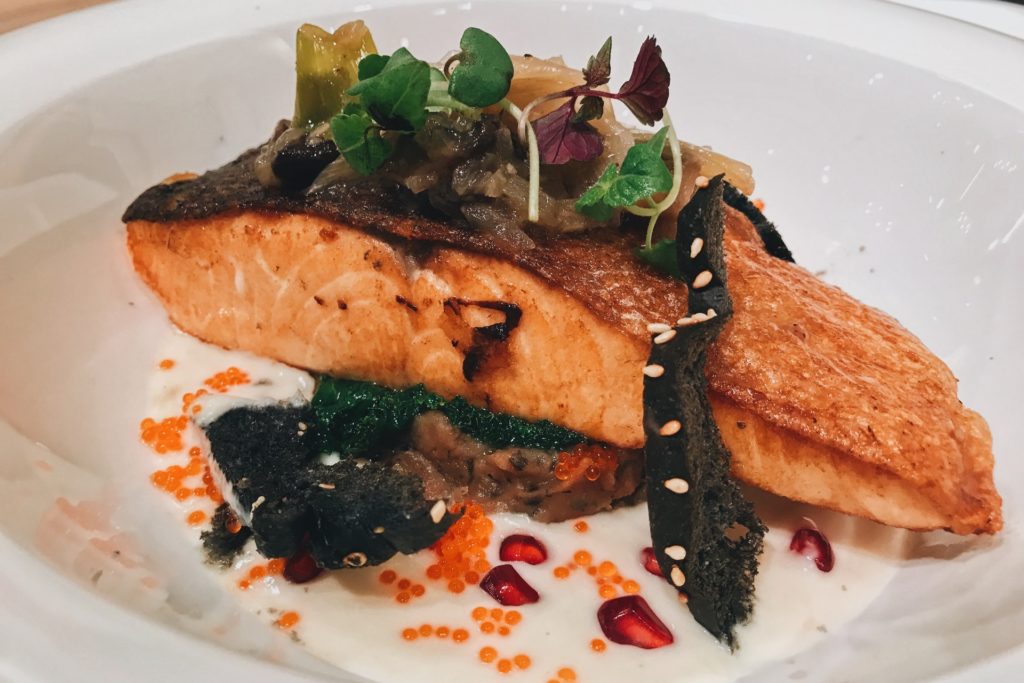
What is the best way to cook salmon fillet?
Would you like to make nice and tasty salmon fillets for your next dinner? There are several best ways to cook salmon fillets. In this article, I describe the three most common of them. The most common ways to cook salmon filet are pan-frying, baking or roast in the oven, steaming, and grilling for a healthier result.
Why fillet? Because fillet does not have bones, of course! Well, fillet meat also is usually tender and juicy and contains plenty of good stuff in it. And salmon fillet is easy to cook. In this article, you will learn the nuts and bolts of cooking salmon fillet. Read on to find out the details.
Selecting the best salmon fillet for cooking
You may want to learn that salmon has several species and the difference between them affects price and cooking methods.
Types of Salmon
There are several types of salmon. First, there are wild and farmed salmons. Wild salmon is overall considered the best type of salmon to cook. Hence, the fillet should also come from wild salmon.
It is not that farm-grown salmon is bad, it is that wild-caught one is considered better for several reasons – better nutrients and so forth. Also, farmed salmon is considered to absorb more natural pollutants than a wild ones.
But let me note, that overall, it is also perfectly fine to eat farmed salmon.
Then, there are Atlantic and Pacific salmons. As the names suggest, the distinction is based on the origin of each type – they come either from the Atlantic Ocean or from the Pacific Ocean regions.
Apparently, the majority of Atlantic region salmon is grown on salmon farms because of the low population remaining. It was declining for decades because of overfishing. With pacific region salmon choice, you are more likely to find wild salmon.
It is likely, that in the future we will start eating only farmed salmons due to the continuously declining population.
Then there are types of salmon by specific name or breed/species: Atlantic, Chinook, Chum, Coho, Pink, and Sockeye Salmon. Atlantic is the same as I described above. The rest five are all pretty much types of pacific salmon.
What are the best types of salmon for cooking?
Atlantic
We talked about it. Alright for cooking and eating. It costs about $10-$15 per pound and is less expensive than wild salmon.
Chinook
Also called King, Spring, Blackmouth salmon. The largest and the saddest of all salmons. This fish is the largest in the family, contains more good fat, and is quite tasty and juicy because of that. And it is usually more expensive than other types – up to 27$ per pound. I think this is the best one for a fulfilling meal for a group of people.
Sockeye Salmon
Also called Red Salmon. Second largest in the family. Also quite fulfilling. This is one of the most often used for cooking fillets. It is recognized by the industry as one of the most flavorful and it is the reddest color of the fish meat in the family.
It is leaner and smaller than chinook and is cheaper. Most likely, if you purchase salmon fillet in the grocery store, it will be made from sockeye salmon. About $15-$20 per pound.
Coho
These are medium-sized fine salmons with red color and average leanness. About $15-$20 per pound.
Pink
Pink is the smallest salmon and has probably the leanest fish meat in the family. But usually, it is processed into other products rather than sold in stores.
Chum
Just a salmon. Nothing exceptional, but quite eatable. More pale color and less fatty. Also usually processed and sometimes sold in the stores.
How to choose salmon fillet cuts
Each individual fillet may be from several different cuts: top loin, loin, belly, second cut, tail.
Top loin (also called “tenderloin”) is the best and premium salmon fillet cut. More expensive. Excellent for grilling.
The regular loin is good too. The other cuts could be ok as well, but loins usually are meatier and richer in flavor.
In the unlikely event you may want to see more detailed information about each salmon species, which of them are endangered (thus, restricted fishing and higher price), and photos – you can check this government’s website.
How to fillet a whole salmon
I will not discuss the process here in detail, because you most likely will purchase a ready salmon fillet in the store.
In short, here is how to fillet:
- Cut off the head.
- Then put salmon with its back towards you.
- Put knife right along the backbone (along the spine) and cut fish in two halves from one side to another (from neck to tail)
- Then turn fish with its stomach towards you
- and cut from one side of the fish (neck to tail) to make sure that salmon is cut into two halves completely.
- Then for each half, you put it with its back toward you, put a knife between the skin and fish meat
- and using a knife cut off/peel the skin off the fish meat.
- Always be careful with knives! Use thick gloves to protect hands.
That is in a nutshell how to cut a salmon fillet. But I do recommend that beginners consider purchasing ready salmon fillet in the store.
How to select salmon fillet in the store
I recommend purchasing individual fillets, not the whole salmon side. That is if you do not want to mess with cutting it and then with picking out bones one by one.
Please note, that salmon steak and salmon fillet are different types of cuts. You should look specifically for the individual salmon fillet.
Usually, fillets are sold already skinless and boneless. But some chefs recommend buying fillet with skin on because of its nutritious values and for a more flavored taste. If you can find such fillet cut.
- Look for shiny salmon fillet, without wrinkles, cracks, or other deformations. It must be firm and springy, not soft.
- Usually, you should press the fillet to check that it is not overly soft. The best quality fillet is one that pushes back like rubber or a spring. Not too hard, not too soft. Just firm.
Essentially, if it takes its original shape back even after you press it hard – then it is a good fillet. If it changes its shape and stays like this – this is not the best choice.
Note: the Atlantic farmed salmon is more likely to be softer than its wild-caught cousin just because of the difference in the growth process. That is ok.
It must not smell too much. If it smells too much with the fish smell, it may have been out in the air too long.
Otherwise, you can buy frozen salmon. Most often you will be able to buy frozen salmon which is fine for cooking. More so, some chefs prefer frozen salmon because it gives them more confidence that the salmon was not frozen and then unfrozen while being shipped across the country.
Look for a vacuum-sealed one. And it should say on the packaging that it was frozen soon or immediately after being caught or harvested.
The whole salmon side is enough for 5-6+ people. Individual fillets are usually cut just to be enough for 1 person meal. Therefore, if you have a crowd – buy at least one fillet piece for each person you intend to treat them with cooked salmon fillet dinner.
A note about salmon brands. There are many good salmon brands, so I will not go into detail. You can usually see a good brand when it is pricier than others. Alaska Seafood, Aqua Star Pacific, ALDI, HelloFresh Regal, Whole Foods – all these and a few more are considered good quality brands.
Storing freshly purchased salmon fillet cuts
Obviously, frozen fillet cuts can be stored in a freezer for some time until you are ready to unfreeze and cook them. Always check the expiration date on the package.
If you buy fresh cut and do not want to freeze it then you can put fillet in a bowl filled with ice – put it on top of the ice. I suggest putting salmon fillets in a sealed bag and then putting them in the bowl.
It is recommended to store salmon at about – 32 F degrees. Therefore, put a bowl with salmon somewhere in the deepest and coldest part of the refrigerator. Put the bowl in the fridge, closer to the inside back wall.
You can store fresh salmon in such a way for about 1-2 days and it will keep it fresh.
Freezing salmon fillet
Just put recently purchased or cut fillet in vacuum-sealed bag or freezer sealed bag and then put bags in the freezer.
I suggest an individual bag for each fillet to avoid frozen frosted pieces sticking to each other which may result in uneven thawing.
You can store them for about 2-3 months. Some people store longer but I cannot vouch for that method as each piece of fillet goes bad differently.
Best ways to cook salmon fillet
There are general tips that you can apply no matter which way to cook salmon fillet you use. For example, besides salt and pepper, you can always add anything from lemon, garlic, paprika to many other spices and herbs. Add those either in the pan or by spreading over the fillet and then putting it in a grill or in the oven before cooking.
No matter which way you use it, I suggest having a thermometer in your kitchen regardless of whether you cook salmon fillet, or anything else. I find it useful to check the temperature in order not to undercook or overcook what I am working on.
General tip: below I posted FDA guidelines for checking when the fish is done cooking. Be sure to adhere to them. Also, note, that fish keeps cooking by itself for several minutes after you remove it from the pan, oven, grill, or steamer. Take that into account to make sure you do not overcook it too.
Best way to cook salmon fillets with skin
I will tell you that salmon fillet can be cooked with its skin on the side. The best ways to cook salmon fillets with skin are probably pan-frying and baking. You can also steam or grill such fillet but it may not be as tasty.
Grilling or baking may make salmon skin crispier while steaming may make salmon skin softer. I found those with skin made on the pan or in the oven to be crispy, crunchy, and tastier.
The best way to cook salmon fillet in a pan
Cooking salmon fillet in a pan is probably one of the easiest ways to cook it. Anyone has a pan at home, right?
You need the following:
- Salmon fillet piece (pieces), 4-8 ounces each.
- Medium-sized frying pan, preferably stainless steel or regular non-sticky one.
- Olive, canola, or vegetable oil.
- Seasoning, such as garlic, pepper, salt, or herbs.
- Thermometer (optional)
Here are exact steps for pan-frying salmon fillet:
- Take a piece of salmon fillet. If you are taking it from the fridge, warm it up at room temperature for 30 minutes.
- Many chefs also recommend drying fillet with a towel before putting it in the hot pan.
- If the fillet piece is too large to fit the pan then cut it in half or into several parts, enough to fit in the pan.
- Take the pan to medium-high heat on a gas or electric stove.
- Then add 2 or 3 tablespoons of oil – enough to make a very thin layer in the pan.
- You can salt or pepper or add some other spice on top of the fillet, or on both sides, to season it.
- When oil starts smoking just a little bit you put fillet into the pan. The point is to make sure that the pan is hot when you put the fillet on it.
- Keep cooking on one side, shaking pan occasionally, until salmon meat detaches from the pan bottom and at least half of salmon fillet (that half which is being fried) becomes pale or opaque and flakes easily. The cooked side may also become crispy.
- You may pierce it with a thermometer and check if it is in about 125-150F range. At this temperature salmon usually cooks well but not too hard. This step is optional.
- Then flip the fillet on the other side and repeat the process.
- The whole process should take about 5-10 minutes for each individual fillet piece.
- Remove and add some more oil and add the next piece of fillet.
- Pour some lemon juice over the hot cooked salmon to better taste. You can also pour lemon juice on raw salmon before putting fillet into a pan.
Note: if you want to sauté lightly, then use little oil – one tablespoon, for example. If you want to fry the salmon, then add more oil. You can put a pan on higher heat and then fry it quick and hard. Try both ways.
How to cook salmon fillet in a pan with skin
More durable skin side down should take about 6 minutes to cook, more gentle non-skin side down should take about 4.
If you use fillet with the skin on one side – start with the skin side on the pan first – this will help to cook salmon fillet better.
The best way to cook salmon fillets in the oven
How do you cook salmon fillets in the oven? Generally, the best way to cook salmon fillets in the oven is by straight baking them. You take a fillet about 1 inch thick and bake it in the oven for about 10-20 minutes. Read further for details about the temperature for the baking salmon fillet.
You will need:
- Salmon Fillet
- Baking sheet or baking tray.
- Aluminum foil (optional for juicier taste and little faster cooking)
- Seasoning of your preference
Here are the exact steps for a baking salmon fillet in the oven:
- Preheat oven to 375-475 F. About 425 is optimal. See the table below for the best temperatures and baking times.
- While preheating the oven, season the salmon fillet with what you prefer – from salt or lemon to pepper or exotic herbs.
- Tip: if you want a tastier baked salmon fillet, then you can brush the raw fillet with some olive oil before baking.
- Now, you can either wrap seasoned fillet with aluminum foil to make juicier fillet.
- You can also skip wrapping in foil but then your baked salmon will taste somewhat drier. It is your choice.
- Put the seasoned salmon fillet on the baking tray. I suggest skin down if you use fillet with the skin on one side.
Put baking tray with fillet in the oven and bake for 10-20 minutes depending on the settings (see table below). The lower the temperature setting, the longer you should bake.
At what temperature setting you should bake the salmon fillet?
Oven temperature defines the length of baking time. Below are the approximate numbers for the correlation between oven temperature and length of cooking time.
At 350 F – about 25-30 minutes.
At 375 F – about 15-20 minutes.
At 425 F – about 14-15 minutes.
At 450 F – about 13-14 minutes
At 475 F – about 10-12 minutes.
Also note, that fillet cooks a little sooner when wrapped in aluminum foil. The thicker piece will require an extra couple of minutes to bake to perfection.
When the baked salmon fillet is ready?
In fact, FDA provides guidance on how to know if fish is ready. Fish should be cooked to an internal temperature of 145° F (63° C).
This is where an instant-read thermometer will help you to determine by sticking it in the middle of the fillet (all the way to the middle of its thickness) to check the internal temperature. It is ready if the thermometer shows an inside temperature of about 140-145 F.
Baked salmon fillet (and other fish) is ready when it is opaquer and can easily flake apart with the fork. You can try to stick through a fork or toothpick in the thickest part of the fillet. It is ready if it penetrates all the way down easily, and fillet flakes easily, and opaque in color.
Some people eat the skin of baked salmon. I personally prefer removing it.
Best way to cook Salmon Fillet on a Grill
Grilled salmon fillet is not only tasty and nutritious food but is a relatively healthy option. It is about taste though.
You will need:
- grill,
- fuel,
- salmon fillet,
- salt, grounded pepper,
- olive oil.
For grilling, you can use either hardwood, charcoal, or briquette fuel. If you want to do a cleaner grilling process, then you can use paper for lighting it up.
The best temperature for grilling a salmon fillet
If you grill salmon on less than 450 F, then it will take longer. Medium heat with a longer grilling time will produce a slightly different taste. Try both ways to see which of the two you like more.
Heating up the grill to about 450 F to 550 F is the most recommended range, although some cooks grill salmon on 375-450 range in the aluminum foil. You can check the temperature on the temperature gauge on the grill itself.
Steps for grilling salmon fillet:
- Preheat the grill to the temperature recommended above.
- Season the salmon fillet according to your preference. You season it with garlic, pepper, rosemary, lemon, or any exotic herb.
- You can brush the fillet with a little bit of olive oil for a thinner melty taste and faster cooking.
- You can grill salmon fillet with or without aluminum foil. Aluminum foil-wrapped fish cooks faster, of course.
- Put fillet on a grill and close the lid.
- Grill the salmon fillet for about 6-12 minutes on one side, depending on its thickness and grilling temperature.
- Next side will take less time to cook – 4-8 minutes.
- Then flip the fillet on the other side and close the lid again.
Tip: for skinless fillet, once the grilled side easily detaches from the grill grates, this may be a signal that that side is about to be ready and you may think about flipping it.
As usual, the skin side will require at least 50%-100% longer cooking time, if you use fillet with skin on one side, then side without skin. Skin acts s a barrier. For example, grill 8 minutes on the skin side, then 4-5 minutes on the non-skinned flesh side.
IMPORTANT TIP: Always start cooking on the skin side first to make sure you cook the skin properly.
When the grilled salmon fillet is ready? The fish must be fully opaque and flaky when cooked. See FDA recommendations I mentioned above in this article.
While it is grilling you can add some vegetables like asparagus, zucchini, or pretty much anything else. Then you will have a grilled salmon fillet with grilled vegetables.
You can eat the skin too, by the way.
How to tell when the grilled salmon fillet is ready?
Same as usual – use FDA guidelines mentioned above. Salmon fillet should be more opaque, flaky on the thickest side, or 140F-145F degrees if you use an instant-read thermometer in the thickest part.
Cooking Salmon Fillet by Steaming
Steaming salmon fillet is probably the easiest way to cook it. It is undoubtedly the healthiest too. You can steam salmon fillet with vegetables as a complete meal.
Steaming salmon fillet takes about 4-10 minutes, depending on the method you use and on how many fillets you cook together.
Using an electric steamer is the preferred way but using a heavy large steaming pot is fine too. Plus, the pot is easier to wash and clean. Steaming will be even faster and more powerful if you use a Dutch oven.
For steaming, I prefer fillet without skin because it does not come out crispy and tasty as when pan-frying, baking, or grilling.
So, you prepare the salmon fillet as follows:
- Wash and dry the fillet.
- Season with garlic, pepper, rosemary, or other herbs you prefer.
- No olive oil is required if steaming but adding olive oil to it may make the resulting cooked fillet softer.
- Prepare water to add to the steamer at the depth of at least 1 inch. You can add herbs, lemon, bay leaves, salt, pepper, or other ingredients into the water to create a flavor that you may like. The fillet will absorb all that while steaming.
- If using a steaming pot instead of an electric steamer then bring water to a boil, let it boil for a few minutes to mix flavors of ingredients.
- Place metal steaming net or similar rack on it.
- Add fillet or fillets on top of the steaming net or rack.
- Put the lid on.
- Steam for 5-7 minutes.
- There is no need to flip fillet when streaming, but you can if you want to make quite sure it is cooked through.
- If you added vegetables, then you will have the whole meal ready.
The more pieces of salmon fille you add the longer is cooking time. It could be 7-15 minutes. Obviously, thicker fillets need longer steaming time.
Note: if you leave in a high-altitude location, water is boiling at a lower temperature and may need to extend your steaming process for a longer time. I am not sure how long, but you should ask around.
In any case, use FDA guidelines which state that cooked fish must be opaque, flaky and 145 F (63 C) degrees in the very middle of the meat – then it means it is ready. Use a digital instant-read thermometer to check the temperature.
Can I store cooked salmon fillet in a fridge?
You absolutely can store cooked salmon fillet in a fridge. In fact, I think that a refrigerated fillet still tastes better than a refrigerated salmon stake.
How to store cooked salmon in the fridge?
Put it in a zip bag, or vacuum bag for longer storage. Plastic box too, but I would rather use a ceramic plate and put cooked cooled down fillet on it. I do not put hot food in the fridge to make sure I do not mess the fridge and any food already stored in it.
Cover the plate with a tight lid or plastic wrap. The absence of fresh air prolongs refrigerating time.
You can store refrigerated cooked salmon filler for at least 1 or 2 days. I sometimes do even longer, and it is still good.
Now, you can put cooked salmon fillet in a freezer and freeze it there. It may last for a month or two frozen. Maybe longer, but I did not experiment with that.
Reheating refrigerated or frozen cooked salmon fillet.
Reheating is easy on a microwave. I have a separate article on how to reheat frozen fish in a microwave – see it earlier in this blog.
You can just reheat refrigerated fillet on a medium or high. But make sure to cover the plate with a lid as fish meat starts exploding in a microwave when heated on high.
Final thoughts on cooking salmon fillets.
Cooking salmon fillet is different than cooking salmon steak because fillet is usually thinner and softer. Therefore, you do not need to cook it as hard. But other than that, things may be similar.
Salmon fillet makes good food because it does not contain bones. This is what I really love about it.
Once you cook it, you can just go ahead and immediately enjoy it alone, for two, with the whole family, or with a crowd of your friends.
The thing is salmon is meaty and that what makes it a preferred fish choice for many.
On the other hand, the best ways to cook salmon fillet described above are essentially nuts and bolts basic methods everyone can use. Oh, and they also can be used to cook other types of fish. But that will be the topic or topics for other articles.
Enjoy freshly made salmon fillet!