
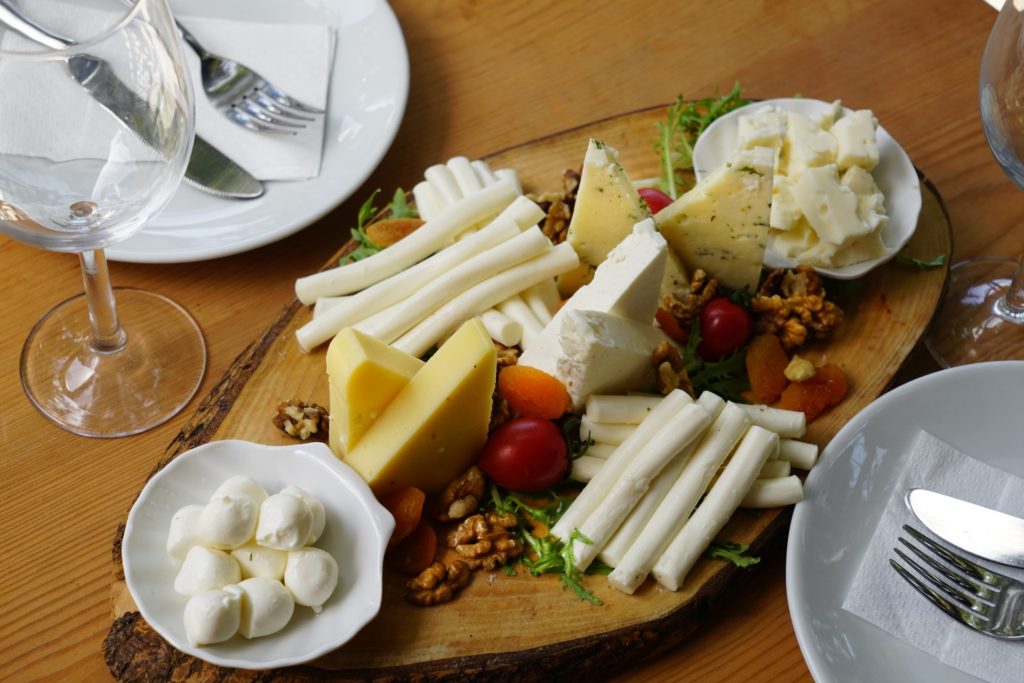
Cheese is a dairy product that which you can serve in many forms, such as a topping on a salad or pizza or blended in a dish. In this blog post we provide comprehensive overview of how to serve different types of cheeses.
Cheese brings to the table a unique flavor and texture. Overall, cheese is used in several globally famous cuisines. It is delicious and aromatic and makes a sandwich or a cracker or a pizza or pasta a heavenly treat. Here we discuss how to serve different types of cheeses.
There are different types of cheeses, and there are many ways to serve cheese. A cheese course generally comes before serving dessert. From this article, you will learn the basics about serving cheese to get the most of its flavor. Let us dive into how to serve different cheeses.
How to serve different cheeses at a party?
When you are hosting a party or going to a party, you often see most people looking for cheese as a part of the cuisine. If you are a host, then a platter of excellent and different cheeses can be a winning course and most certainly will satisfy many of your guests.
The preliminaries
Check how many people you are hoping to attend your party. Then figure out whether you want to serve cheese as an appetizer or after full dinner but before dessert. That will define which different cheeses you wish to include in the cheese platter. Below we list the most common types of cheeses you can serve at the party and whether they are soft or hard.
Some common types of cheese include:
- Mozzarella cheese (Hard, semi-hard)
- Jack cheese (Hard, semi-hard)
- Swiss Cheese (Hard, semi-hard)
- Cheddar cheese (Hard, semi-hard)
- Ricotta cheese (Soft)
- Parmesan cheese (Hard, semi-hard)
- Gouda cheese (Semi-hard, soft)
- Feta cheese (Soft)
- Cream cheese (Soft)
- Cottage cheese (Soft)
- Blue cheese (Soft)
- Camembert (Soft)
- Brie (Soft)
- Goat cheese (Soft)
Of course, hard cheeses are those that are hard and firm. Semi-hard are firm. You can cut them into thin slices or pieces or rectangular or cubic pieces for serving. Or, you can melt them with other foods. Soft cheeses can be cut or melted (Brie, camembert, blue cheeses). Some soft cheeses are so soft that they can be mixed the something else or eaten by themselves from a bowl (cottage cheese).
Most hard cheeses are aged for many months in the cellar and become hard cheeses. But cheeses like Mozzarella and Ricotta are not aged – they are fresh. And thus, they were not aged and pressed, so they are semi-hard or soft. Cottage cheese and cream cheese are also fresh cheeses.

Example of simple cheese tray with a variety of cheeses on it cut in different ways. You can see blue cheese cut in wedge, probably swiss cheese cut in cubes and something like mozzarella or jack cheese cut in slices. Served with olives and a pear cut in slices.
How much cheese do you need to serve at the party?
After taking care of the preliminaries, it is essential to evaluate the type of cheese you should serve and quantity. The average cheese serving size per person is around 1oz to 2oz. That is if you have other sufficient food at the party.
For a cheese platter’s post-dinner course, 1 to 2 ounces of cheese per person should be sufficient to serve at the party. One pound is 16 ounces so that it will serve 8 to 16 people. I would say that one and a half pounds of cheese per 10 people should be quite enough.
On the more generous side, you can buy anywhere about ¼ pound of cheese per person. More than that is generous and suitable if you specifically throw a cheese party. As to the rest, ¼ pound of cheese per person is very well enough. Just keep in mind that there is usually that one person who will eat much of the cheese. I know this well because that person is me.
Do you want to know a trick for extending cheese at your party to make served cheese last longer? Cut in smaller pieces or thinner slices. It is a psychological trick, and it works.
A good number of cheese types for the party
If your party is not about cheese, serving only one or two types of cheese is sufficient. However, if it is a food or cheese party, generally, chefs recommend serving 5 to 6 cheese types, with a minimum of 3-4 types of cheeses. You want to satisfy all the tastes. Just plan such that you fulfill the cheese course without overwhelming or overloading the cheese options, but by serving enough cheese for everyone. See above.
Choosing the cheese for the party
When it comes to buying cheese, there is no wrong cheese. However, going for some cheeses that you like or the most common choices blended with unique tasting ones will be a good choice.
Helpful tips on choosing the cheese types:
- A pre-dinner cheese course can include lighter low calory cheeses like fresh mozzarella, swiss, provolone from hard cheeses, or ricotta or goat cheese from soft cheeses with herbs.
- A post-dinner cheese course – serve it with creamy rich or just rich cheeses such as cheddar, Monterey Jack, blue cheese, manchego, and Gouda.
- You can choose cheese by country of origin, by base type (goat, cow, milk).
- Choose cheeses that are alike and serve them in batches. For example, swiss with hard Italian cheeses. Or mozzarella with cheddar or jack cheeses. Or Brie, camembert, and blue cheese.
- I suggest serving two types of cheeses which are different types. Say, at least one hard cheese type like swiss and one soft and creamy kind like camembert.
Do not forget that you should also serve cheeses along with matching foods and drinks. Each type has a corresponding matching food or drink. See below for more matching types.
How to serve different cheeses
When it comes to serving cheeses, there is no wrong way. It should be easy and fun.
At what temperature should you serve cheese?
Serve hard and semi-hard cheese at room temperature
Hard and semi-hard cheese is aged and made at cellar temperatures. It can survive at room temperature for a long time, especially if it is hard or semi-hard cheese. Many chefs insist that the best option is to serve cheese at room temperature (67-70°F degrees). Serving cheese cold reduces the flavor; serving cheese hot damages structure (melting). Never do cold cheese as it would be bad etiquette. And never freeze cheese.
The complex and aromatic cheese flavors appear when you serve it at room temperature. Keep the cheese out for an hour before serving, and it is best not to microwave or heat the cheese until then.
Serve soft cheese at a colder temperature.
In my opinion, soft cheeses usually are better served chilled slightly to maintain shape. That includes anything from Camembert or Brie to crème cheese and cottage cheese. Slightly chilled does not mean cold!
Do not overstock cheese on a plate or tray
Many bloggers and cheese lovers advise not to overload the cheese platter or the cheese board, or the serving tray. Much less a plate. If you need to serve lots of cheese, then purchase alarger board or use different boards for different cheeses. Make sure guests can see all individual pieces of cheese. Serving cheeses crowded on a plate does not look tasty.
I agree. Too much cheese stuffed on board does not look appetizing. Cheese looks more delicious when served in distinct pieces in moderate quantities.
Soft cheeses are usually served on a plate, in a bowl, in a glass bowl because they do not maintain shape and leak moisture. I am talking about cottage cheese and goat cheese. Glass bowl is an ideal vessel to serve soft cheese.

On this photo we can see two cheese trays or cheese platters with many varieties of cheeses on them. But neither has more than 4-5 types of cheese on it. We can see cut pieces of semi-hard or hard cheese, and small cubes of blue cheese. Plus, creme cheese or some other such type of cheese in small glass bowls on one tray, and spreaded over toast bread slices with some smoked meat and herbs on another tray. See honey deep there? Pay attention to these knives too it is easier to cut cheese with them.
How to cut cheese just before serving
If you cut cheese too early, it may dry before you serve it because air may make it drier. It will start forming an invisible crust. Of course, you can cut hard cheeses in advance as they last longer. But soft cheese starts spoiling due to bacteria present. You should cut cheese right before serving.
Many bloggers and chefs recommend never cut the end (nose) of the cheese piece. Make the “nose sharp” if you cut it in pieces. Otherwise, maintain the shape of the cheese by cutting slices before serving. It is bad etiquette to cut cheese into a slice parallel to the rind. When serving cheese, try to include the center and the edge to let guests enjoy the overall cheese flavor.
But if you need to cut cheese in advance before serving, then make sure to put cut pieces in a non-ventilated container. Or, cover cheese on a plate with a glass dome or clear food plastic wrap. It is good practice to put cheese on the table with the glass dome and then take it off to show that cheese is fresh and no insects took a bite from it before you serve it to your guests.
Bloggers also recommend using a different knife for each cheese type without mixing with other cheeses to avoid having pieces of cheese with the wrong flavor all over them.
If you serve cheese relatively often, it makes sense to buy a special cheese knife or a set of cheese knives designed to cut cheese. You can use a cheese knife, cheese wire, skeleton knife, or a cheese plane for that.
Therefore, when you serve cheese at the party, place a cheese knife or a knife by the plate of each guest.
Cheddar, jack, mozzarella, feta are usually cut into rectangular blocks. Swiss, parmesan, Gouda, and cheddar also can be cut into wedges. Otherwise, you should cut soft cheese like Camembert or Brie or Blue cheese in wedges.
Serve cheese on ceramic, glass, marble plate, tray or cheese board
Cheese is sticky, and it can pick up flavor from the tray it is on. Therefore, it is better to serve cheese on something non-sticky, like a clean glass or marble or only regular ceramic plate.
Otherwise, special cheese plates or cheese boards, or trays with non-wood surfaces may be sufficient. Remember that pure wood or plastic tray can share its flavor with the cheese you place on it.
You can serve cheese plate or platter with many cheese pieces on it. You can also serve each guest individual plate with one to several cheese pieces on each plate. Cheese platter is good for younger party or corporate party. For more upscale occasion, I would use glass or marble bowls, or individual cheese plates.
Serve cheese along with toothpicks or cheese sticks. Yes, you can eat some cheeses by hand. You can take a fork and use it. The best etiquette is to use toothpicks. Even better, use cheese sticks to stick into individual cheese pieces, or place aside for people to use when picking pieces of cheese they live.
- You can serve crackers of baguette slices along with cheese but in a different bowl or basket.
- Select neutral cracker or French/sourdough plain bread to enjoy the cheese flavor. You can also try dried fruit, walnuts, or olive bread.
- Plate the cheese separately or make a platter when serving.
- Serve pre-dinner cheeses with nuts, olives, dips, and prosciutto.
- Serve post-dinner cheeses with toasted nuts, jams, dried fruit, and honey.

Another example but now you see how to serve different cheeses with the whole table. You can see variety of cheeses, fruits, berries, crackers, chips and so on here. Nice, is not it?
How to serve different cheeses: by type
How to serve mozzarella, jack, cheddar cheese, parmesan, gouda, or swiss cheese?
Mozzarella – This is the most popular cheese in USA. It is semi-hard and Mozzarella cheese can be eaten with bare hands when fresh. It is delicious on its own. I still would use cheese sticks or toothpicks for a party.
You can serve rectangular or square pieces of Mozzarella cheese with fresh marjoram or basil, salt, pepper, and oregano, eggplant, onion, mushrooms.
You can serve cheese and plants separately, or you can mix them together like salad as one dish. Basil and mozzarella is the most common combination.
Top it with extra virgin olive oil. Serve mozzarella with fresh herbs, spinach, eggs, tomatoes, pepper, oregano. This cheese often is melted on top of pizza.
You can add fruit son the side – melons, pears, berries, nuts.
Jack – You can serve Jack cheese fresh or melted. You can serve aged Monterey jack as an alternative to parmesan on pizza or pasta. You can snack jack cheese on its own and mix it with crackers on a plate.
Melt it in or serve just it with with mashed potatoes, pies, use it in macaroni and cheese. Or just cut and serve jack cheese in pieces with herbs or cucumbers, tomatoes with bread. Eggs, peppers, melons, grapes will suit too.
You can serve jack cheese as slices in cheeseburgers or other burgers.
Cheddar – You can serve cheddar cheese alongside dried fruits, crackers, jams, other sweet sauces, bread, nuts, and even apple slices. Honey would do nicely on the side as a dipping sweet. You can serve it melted, in a dip or topped on a casserole.
It is a versatile cheese that anyone can use in breakfast to a skillet dish. Eat the cheese straws as a snack or eat with an apple pie for a tasty dessert. Some serve cheddar with olives and meats, sausages, or ham.
You can serve pretty much anything with cheddar cheese: jams, fruits, nuts, vegetables, meats, granola, olives.
Parmesan – Although many cooks prefer to top other dishes with parmesan cheese, you can eat it fresh and serve parmesan cheese in chunks. Cubes or rectangular chunks or even chunks without a specific shape.
According to many cheese lovers, the hardened external layer is the best part of it. Parmesan cheese can be grated over pasta or served in blocks or chunks with balsamic vinegar drizzle.
Serve parmesan cheese with fresh fruit, and your guests will love it. Cut it into pieces and mix with cut fruits as a salad. Put it in soups for a unique cheesy flavor.
Gauda – Gauda is a semi-soft cheese. You can serve wedges of Gouda cheese after trimming the rind. Slice them into triangle-like wedges and then couple them with bread or fruit on a platter.
Serving Gauda with white or red wine is also a common practice. We can serve Gauda cheese with vegetable dishes pre-dinner or as part of the dinner. I can serve Gauda cheese in sandwiches flavored with mustard. Eliminate the wax rind before serving.
Swiss – Although swiss cheese can be melted, chefs recommend serving Swiss cheese in sandwiches, cheese sauces, pasta, and often clubbed with savory pastries, ham omelets, and stuffed chicken. If it is aged, then it goes well with bread, fruit, and nuts.
You can easily serve swiss with vegetables. But I also like swiss cheese by itself, cut and served in small cubs or thin slices. Swiss cheese goes excellent with wine.
Like all cheeses mentioned in this group swiss is universal cheese and you can serve swiss cheese with pretty much anything from meats to vegetables and fruits, pre-dinner, dinner or around the dessert entries.
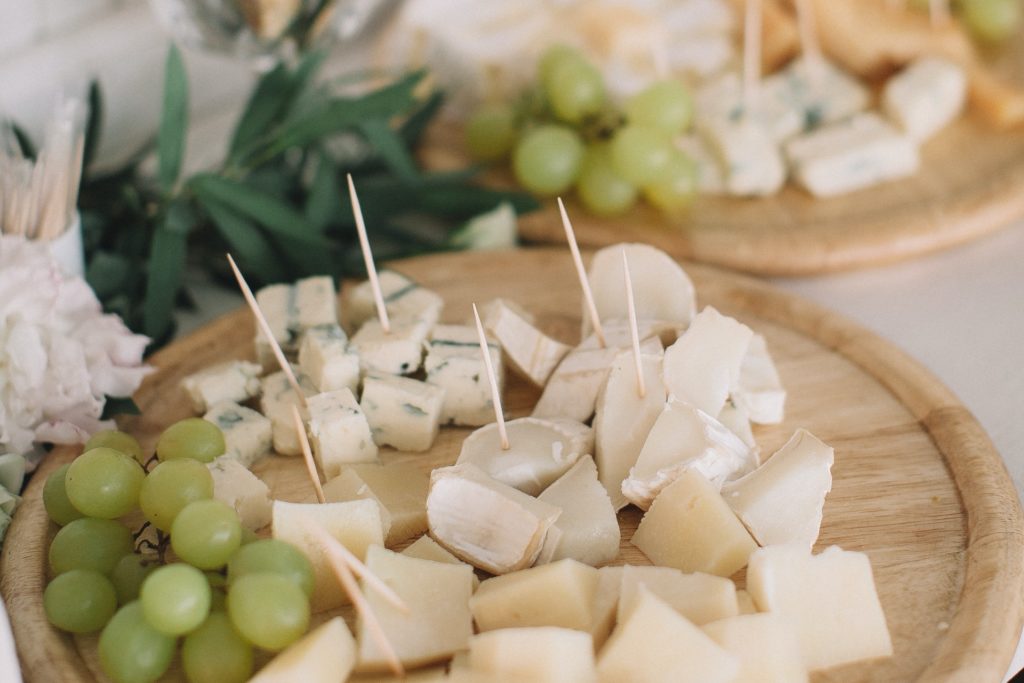
On this picture you can see bunch of cheese pieces of about equal size with toothpicks in each of them for easy handling served on two wooden trays with green grapes. I see what seems like camembert or brie cheese pieces too, although I am not fond of cutting these types of cheeses like that.
How to serve Brie or camembert cheese?
These are more exquisite and tender cheeses. Serve these cheeses at room temperature or slightly chilled. You can warm them up a little bit if you intend to use them as spread on a bread or crackers.
Brie – often cooks serve Brie cheese by spreading it on a bread loaf. Or, let your guests decide if they want to do it themselves by placing slices of bread and wedges of brie cheese alongside. Brie cheese can be served and eaten with its rind. But it is often dug at the center or the inside of cheese, leaving the rind behind. Add fruits and nuts too.
If you want to serve brie or camembert cheese as a spread – it is ok to slightly warm it up in the oven or even in the microwave to make it warmer, softer, and easier for spreading over the slice of toasted bread. Serving it with baguette or ciabatta bread is the traditional way. Modern way is to pair it with toasted bread.
Camembert – You can serve camembert cheese with slices of bread or crackers plus honey or preserves. Slice the cheese with a knife and take a cracker to spread the cheese over. Have it with a French bread slice.
You can also eat camembert cheese as it is. Baguette, ciabatta bread also fit well with camembert cheese.
How to serve creme cheese, feta, or cottage cheese?
Let us see how to serve different cheeses like cottage cheese, feta, and cream cheese. Serve these different cheeses in this group in a glass bowl.
Crème cheese: You can serve crème cheese spread over a toasted bagel or top with an omelet. You can serve crème cheese in cakes and over the cakes or bakery products. You can make a sandwich, fondue, and a cheesecake. Of course, you can serve crème cheese as a spread over the piece of nice bread or a cracker. Serve it as a dip for crackers, toast, or chips.
Almost forgot. You can serve crème cheese by putting it on top of individual berries or nuts individually (super-dessert). Egg, salmon, tomatoes, carrots, broccoli, cauliflower also go well with crème cheese. Chefs can mix it with other cheeses too.
Feta cheese: We can serve salty Feta with fresh bread and olive oil, olives, and peppers. You can use feta cheese in different salads. A Greek salad has feta as its core ingredient. You can roast veggies with feta or topped with feta over hot veggies.
Feta melts quickly and is a good appetizer with a drizzle of olive oil with sprinkled red pepper or oregano. You can couple and serve feta cheese with toasted bread. Feta can be grilled and used over flatbreads and pizzas. Feta is so versatile that it can be used as pre-dinner or dinner with meats or egg-based meals, grains or pastas and vegetables. I would not serve feta as dessert though.
Cottage cheese: Serve cottage cheese by spreading it over toasted bread or cracker with a bit of pepper and salt over it. Top it with veggies. It is good as pre-dinner or dinner cheese. You are sure to enjoy the cottage cheese biscuits. You can serve cottage cheese with waffles or pancakes. You can top the cottage cheese grated over your salad. Serve it with granola or sauce or as a sour cream alternative.
It goes well with vegetables and alright with fruits too.
Here is a tip: if you buy regular cottage cheese in grocery store, take it out of the plastic container and rinse it with water over then thin net with water to remove all the extra gum preserving the cottage cheese. Cottage cheese will be tastier and healthier if you do it. Otherwise, use farmers cheese instead.
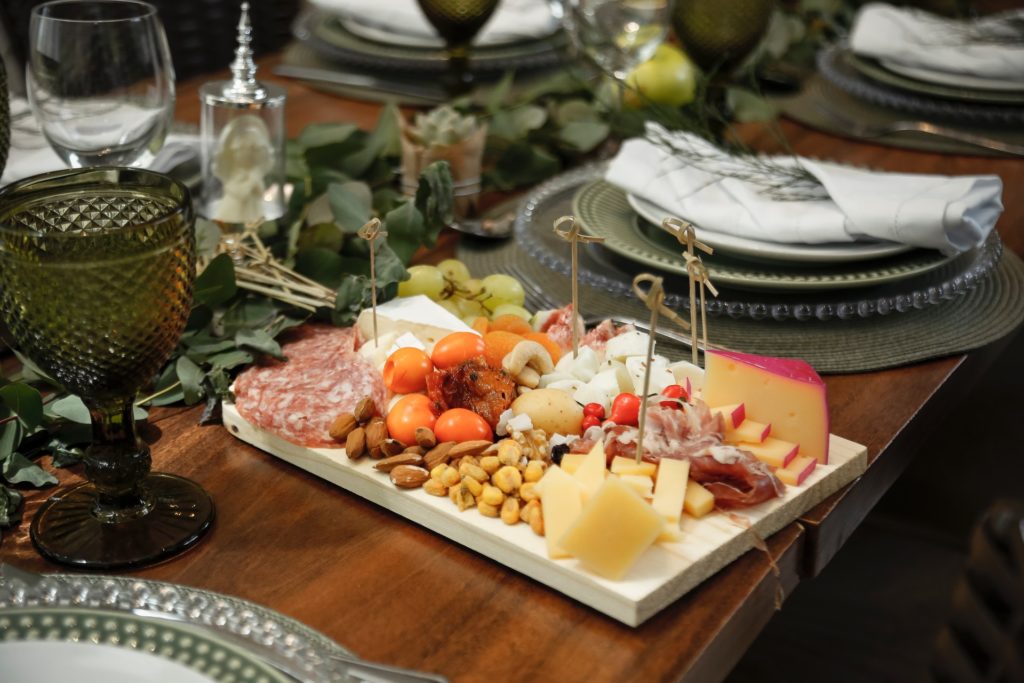
Another example of how to serve different cheeses on cheese tray with other staff on it. I little bit crowded as to my taste, but still looks appetizing. Pay attention that here cheeses are mixed among other types of accompanying foods. We see hard or semi-hard cheeses cut in pieces on the same tray with soft cheese cut in wedges. Cheese sticks are present too.
How to serve goat cheese?
We can serve gat cheese and crunchy, tarty, and sweet elements like apples, honey, olives with garlic, and almonds. These elements cut through the cheese’s buttery richness.
You can serve goat cheese in the following ways:
- Spread it over a bagel or a toast.
- Use it as an alternative to cream cheese for a dip.
- Layer the goat cheese with pesto and serve them spread on some crackers.
- You can top salads with goat cheese slices warmed or with crumbled goat cheese.
- You can make lasagna with goat cheese.
Serve goat cheese and pesto as a pasta sauce.
How to serve burrata cheese?
You can serve burrata cheese at its best only at room temperature because it enhances the full flavors and taste of burrata.
You can serve burrata cheese in the following ways:
- Serve the burrata cheese post taking it out of the refrigerator half an hour before the serving.
- Serve burrata cheese fresh and enjoy at its best in its classified fresh state. Eat it right after cutting to get the best and original flavor. Later you might get some sour taste if you leave the burrata cheese for longer than few hours or over one day.
- You can serve the burrata cheese with extra virgin olive oil and sprinkled sea salt to get a fresh and tangy taste.
- You can add it to pizza with arugula and tomatoes.
- Woodsy truffle flavors are balanced by the tangy taste of the burrata cheese—pair burrata with truffles.
Burrata tastes the best in Caprese salad. You can replace mozzarella with burrata cheese in salads.
How to serve pimento, blue, piave or ricotta cheese?
The cheeses below do not need to be cut into any specific shape or form for serving. You can serve them in chunk or pieces of any shape or form. You can serve these cheeses as appetizer, pre-dinner, with main dinner entry, or post-dinner before or with desert.
Pimento – You can serve pimento cheese with cumin, peppers topped with cilantro, and jalapenos. It is best to serve the Pimento cheese with sweet red peppers. It is an appetizer and you should generally serve Pimento cheese slightly chilled or room temperature. Serve it as a cracker spread or a bread spread.
Also, you can serve pimento cheese with fried green tomato in a sandwich to give a crunch or make a sausage breakfast with pimento cheese like a casserole. You can serve pimento with green tomato and bacon on a tortilla or make a sandwich or make a ham crostini with pimento cheese. You can include them with eggs and dips too.
You can combine pimento cheese with pork or beef or omelets. As usual, you can serve crackers or chips with Pimento cheese.
Blue cheese – You can serve blue cheese raw, and it is safe and healthy too. This cheese is like camembert or brie cheeses in a way. The mold-creating bacteria that provides the blue cheese its unique color are healthy and safe to consume raw. You can serve blue cheese by melting it over a burger or crumble it over a burger or a salad.
You can also serve blue cheese by serving it with grilled food and adding tomatoes and zucchini. Top pieces of blue cheese over different salads for its creamy texture and taste. Or, just cut it into wedges and serve like that.
Honey, dried fruit, sauces, grains, mushrooms, celery, walnuts, berries, apples, jams, crackers – everything can go with blue cheese.
Piave – You can serve Piave cheese over different soups like bean soup or veggie soup, or minestrone. You can grate or crumble piave over fried polenta. You can use it as a shaving over a soup, salad, or as a block on a cheese platter.
Overall, it goes well as a side to mentioned soups.
Cut this cheese into similar strips or cubes and serve separately or on a plate or tray with fruits or vegetables.
Ricotta – You can serve ricotta cheese similar to crème cheese by smearing it over a toast or top it over a soup or a salad. You can also serve it separately in a glass jar or a small bowl. It can be clubbed with scallions and corn or tomatoes and pesto or over a fried egg. You can eat ricotta as a dessert by cutting into pieces and topping it with honey and strawberries, and Nutella.
You can make pancakes, cheesecake, put in gelato, crumble over a pizza or make it a base over a savory tart. Stuff in pasta or green peppers or crumble over pasta. We can serve Ricotta cheese in different ways.
It goes well spread over a toast or other bread, then berries on top. And do not forget the crackers, of course.
Conclusion
There are different types of cheeses like mozzarella, ricotta, cheddar, parmesan, feta, blue cheese, swiss cheese, etc. You can make a cheese platter with different types of cheese. There are many ways to how to serve different cheeses, as mentioned above.
Some of the sources used:
Pingback: How to Store 3 Different Types of Cheeses - Make Your Dinner Easy