
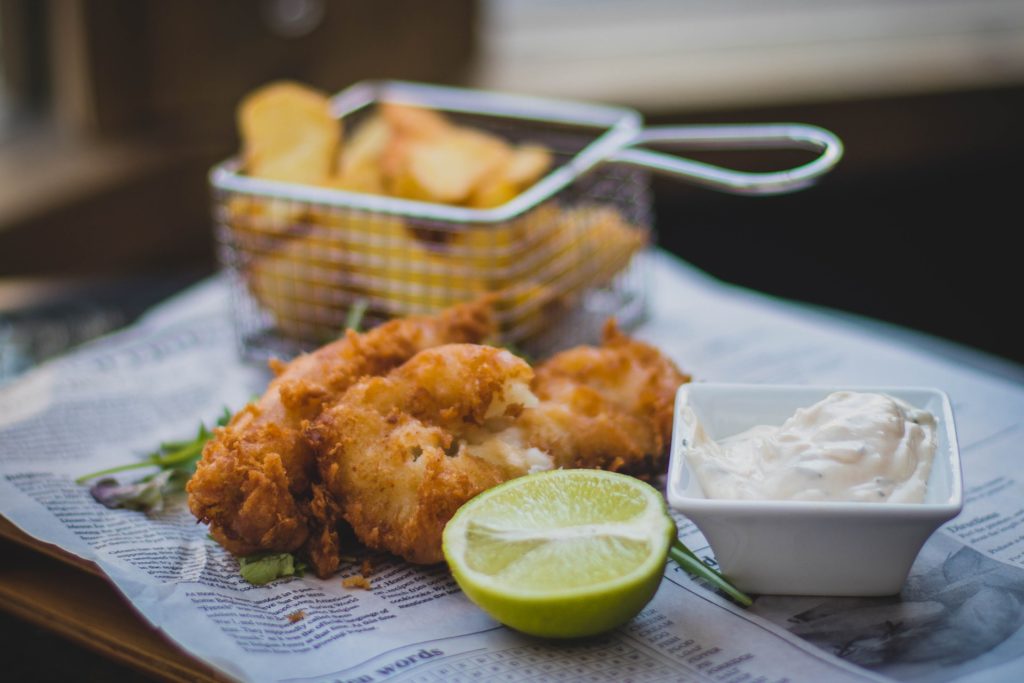
In this article, you will find an extensive list of the best fish for frying. All fish mentioned here can be purchased either in grocery stores, fish markets, fishmongers, ethnic markets, or online. Also, many of these fish you can catch yourself if you are into fish game sport or hobby.
We divided this post into three separate sections:
- Best fish for frying whole
- Best fish for frying at home
- Best Asian fish for frying
Let us dive in.
Best fish for frying whole (with instructions)
Any fried fish can taste good. As a rule, the best fish for frying whole is any that is eatable and fits in your frying pan or skillet. Please note that whole fish for our purposes usually means complete fish with skin, fins and scales, and head. Quite often, chefs would cut the head and tail fin of the fish before frying.
Tip: As a rule, the best fish for frying whole is no longer than 10-12 inches. Even when some species grow much larger than that, you can still buy them small enough to fit your pan or skillet.
You do not want to fry too small fish either, as you will end up with primary bones rather than fish meat. Therefore, the fish sized at least 6-8 inches in size is a good start. And the 6–12-inch fish size is simply perfect to fry whole.
Why is frying whole fish good for you? Among other reasons, fish skin often contains many valuable nutrients that you may be missing when eating only fish fillet.
Some chefs say that frying fish with skin helps to preserve fish meat better. I cannot subscribe to that, but I have heard this opinion. Finally, fish fried whole offers an array of exquisite flavors.
List of best fish for frying whole
Here is a list of fish you can fry whole at home or camping, or on a fishing trip. If you do not want to mess with cleaning and cut it into pieces, then frying fish whole is a good option.
You can fry this fish whole and eat it right after you catch it – that is a part of the adventure. If the fish mentioned below has grown too large to fit in the pan, you can use a larger pan or iron skillet.
Tilapia
Tilapia is freshwater fish that breeds easily and quickly, filling the holes left by overfishing other species.
Native to Africa and invasive to North America, this fish is now industrially farmed in more than 100 countries globally, including the USA and Canada. You can buy it pretty much in any local grocery store.
While tilapia fish tastes kind of average, it is perfect for frying due to its size. This fish tastes better when it is fried, and it is relatively easy to cook the whole tilapia that way.
Whole fried tilapia is excellent to eat with basil, garlic, ginger. You would be better off if you remove scales, although it is not mandatory. Some people cook it in coconut oil instead of olive oil.
(!) But do not overeat tilapia either, because it contains more inflammatory omega-6 than anti-inflammatory omega-3 elements.
Bass
Bass is another trendy game fish. It is a collective name for many smaller freshwater or saltwater sub-species.
Bass is also quite common in North America. You can fish it yourself in many local water reservoirs, including small rivers, lakes, and ponds.
You also can buy it at some grocery stores or online. Or from local anglers.
Smaller bass species are relatively easy to fry due to their meaty structure and size. Striped Bass, white mouth bass – these are some of the best-tasting fish in the family and are the best fishes to fry whole even when camping.
Smallmouth, Spotted Bass, and White Bass are also quite popular game fish subspecies in the USA. Note that many bass fish species are not genetically related to Bass. Primarily, that is true for sea bass species.
Fry whole brass and feel its fantastic taste with vegetables, tomatoes, and greens. You can stir-fry veggies, too, and serve with brass on one plate. You make a salad as a side.
Cajun, pepper as a seasoning, and mashed potatoes on the side will also be good.
Branzino
This is smaller saltwater fish that originated in the Mediterranean Sea. Branzino is an Italian name, also called Mediterranean Sea Bass or European Bass.
The fish is becoming increasingly popular in the USA and is being farmed for the US market because the natural stock is depleted.
Its white meat has a mild taste like the taste of trout (read below about trout). This is excellent fish for pan-frying whole with its skin on. Often you can buy it whole or as fillet at fish markets.
Fry this fish while and taste it with herbs. Especially, use Italian herbs for a good experience. Rosemary, thyme, parsley are good additions.
Tog
Tog is an Atlantic sea fish like grouper, which is also called blackfish. You can either fish it yourself on the shore or a boat or buy it at a fish market or in some grocery stores.
This fish has white firm meat and a delightful taste when fried. It tastes like red snapper. You can fry this fish whole and add tartar sauce to make a delicious fried fish meal out of it.
Some cooks suggest adding a side of mashed potatoes and cut apples. You can also stir-fry green peppers, onions, and garlic instead of apples.
You may add chopped onions and garlic on top of the oil to the frying pan when frying whole tog fish for exciting flavor.
Flounder (Fluke)
Flounder is a name for a group of related flatfish species. Also called Summer Flounder, it is a flatfish with its eyes on one side. It is native to the coastal North Atlantic or the Gulf of Mexico.
It has white, mild meat which does not smell too fishy. Fluke is excellent frying fish for those who do not like to smell fish after cooking. And smaller fish of this kind can be quickly and gently fried whole in a pan or skillet because of its flat structure.
Adding herbs and greens will make this dish blossom.
Crappie (Perch)
Crappie and perch are the same fish, but it is called different names depending on the region. This is freshwater fish which you can catch in many places in North America.
Its perfect size makes it ideal for pan-frying fish. And sweetish white meat of crappie fish makes it extremely popular in US southern states.
Crappie fish skin is tasty, so that you can eat it without any problem. Crappie is one of the best fish for frying for these and other reasons.
Brown mustard, parmesan cheese, and even hot sauce will go nicely with pan-fried crappie-perch.
Haddock
It is saltwater fish with a more distinct fishy flavor and smell. It lives practically everywhere in the Atlantic Ocean. You can fish it yourself, especially in the Gulf of Maine.
The juvenile haddock is right the good enough size for an excellent pan-frying. It is one of the leaner fishes if you are health conscious. Low in mercury too.
Fried haddock fish tastes excellent with asparagus, green pepper, green beans, pea salad, and some good, toasted bread. Also, why not add tomatoes, especially, roasted tomatoes for an unforgettable experience.
Black sea bass
Black sea bass is not technically a bass but is comparable in taste. As you have guessed, it is saltwater fish. It is one of the most popular fish to catch and eat, and you can find it all around the US and Canada in the Atlantic Ocean.
Black sea bass is not too fishy in flavor, and some consider it to be one of the testiest saltwater fishes. Its white meat is mild, delicate, tender, and lean, and you can always find this fish in a smaller size to fit your frying pan. This makes it an excellent fish to fry.
Snapper (Red Snapper)
This larger saltwater fish is native to the Atlantic Ocean and the Gulf of Mexico. This fish has excellent tasty white meat, which can be quickly fried.
Red snapper is both commercial and game fish. This fish can be expensive due to some level of overfishing.
The fish also can grow larger than can fit in the pan. In such a case, use an iron skillet if you want to fry this fish whole. But most of the time you can buy a smaller size.
When this fish is fried, it goes excellent with anything from hot chilies to just stir-fried chopped veggies or fresh herbs.
You can even add citrus fruits to this (and any other) fish.
How about serving fried red snapper as follows:
- covered with fresh lemon or lime juice,
- with wedges of avocado,
- mixed with chopped carrots,
- green peppers,
- and chopped fresh greens salad,
- covered with a tablespoon of olive oil,
- Add salt and pepper as desired.
Yummy!
Trout (Rainbow trout)
Trout is an exceedingly popular freshwater fish with low mercury content from the family of salmons. Therefore, it is oily fish with some healthy fish fat content and rich in the good stuff.
Trout lives in streams, lakes, rivers in North America, Europe, and Asia. Like many other fishes on the list, the trout also can come from commercial farms, and it is usually acceptable to eat those.
Serve fried trout with wedges of onions, black pepper, asparagus, bell peppers, and just a teaspoon or two of olive oil.
Porgy
Porgy is one of the trendy fish all over the world. It lives in shallow tropical waters, but some species live in North America (Atlantic Ocean), Europe, Australia, and New Zealand.
You can buy this fish in many stores, including Whole Foods, and on ethnic markets.
It is also popular game fish for anglers, so that you can catch it too.
Porgy is excellent frying fish. It usually fits the pan and has genuinely nice meat that is easy to fry and tastes well.
Larger size fish
You can try frying whole catfish (wild river caught catfish is better than farmed one) or salmon or cod if it is small enough to fit a frying pan or skillet.
But most of the time, it will be larger than can fit in your pan, so it would be better to buy individual pieces of separate pieces to fry at home. Read the section below for that.
To fry whole fish, all you need is a fire and a pan or skillet and something to put it on.
As a rule, pan-frying fish is better than deep-frying because pan-frying preserves more nutrients and uses less oil which fish absorbs when you fry it.
Note that cast iron keeps heat better than aluminum and thus is generally better for frying fish or anything else, for that matter. Therefore, a good pan or cast-iron skillet is a must-have when frying fish at home.
How to fry whole fish (quick universal recipe)
The whole fried fish can go very well with many sides, including salads, mashed potatoes, fresh green salad, or rice, red or regular onions, lemon or lime juice, and much more.
Here are basic universal recipe and instructions for frying whole practically any fish you want:
Getting fish to fry:
- Catch or buy the whole fish small enough to fit in a pan or skillet or slightly larger.
- Make sure the eyes of the fish are clear, which means the freshest fish.
- Buy whole fish with its fins, tails, and head cut off. Or cut them off yourself later.
- But if you want to fry fish with its tail and head, then buy the fish just the right size for your pan.
- Take a medium or large pan or iron cast skillet in which you will fry fish. Frying one or two fishes at the same on a pan is just enough.
Ingredients:
- extra virgin olive oil,
- plain all-purpose plain flour (or rice flour, cornstarch, semolina flour),
- salt (sea salt or kosher salt is better),
- pepper.
Frying fish:
- Rinse the fish well with clean cold water.
- Make several vertical cuts on each side from the spine to the fish’s stomach for better frying.
- Sprinkle salt and pepper all over the fish, as much as you prefer.
- Put extra virgin olive oil in the pan, enough to cover the bottom.
- Put the pan on the stove (or over a fire if camping) on medium heat.
- While the pan is heating –
- put enough all-purpose flour to cover the bottom of the plate,
- Put both sides of the fish in the flour, make sure the fish is covered with flour.
- Alternatively, you can skip the flour and fry fish like it is without dipping it in flour.
- Oil in the pan must be hot now, so –
- Carefully put fish in the pan. Use utensils to handle fish for safety reasons. For example, use tongs or a fish spatula.
- If you fry the whole fish with the tail, you can grab it by the tail and lower it into the pan headfirst.
- If oil is hot enough, the fish must start sizzling in the pan or skillet right away.
- Fry until the skin gets golden/very brown and crispy – 3-5 minutes for each side.
- Take fried fish out of the pan using utensils and put it on the plate with the clean, plain dry towel.
- You can let fish drain some oil in the towel for a few minutes. Then put the fried fish on the plate, which you can serve to your guest or family member.
Note: Thoroughly cooked fish meat must be opaque and flake easily. To test if it is ready, you can take a fork and stick it all the way through in the thickest part of the fish, try to twist a little. If the fork comes through and meat flakes easily – the fried fish should be ready.
Remember, total fry time should be about 10 minutes per inch of fish thickness.
According to FDA, fish must reach an internal temperature of 145F degrees to be fully cooked. You can use an instant-read thermometer to double-check temperature by sticking it in the thickest part of the fish.
If you fry more than one fish, repeat the process and make sure you have enough oil in the pan. Be careful when you add oil to the pan, as hot oil can splash all over the face.
Serve with fresh salad or vegetables, lemon wedges, tartar sauce. You are done. Basic fish frying is now your new skill!
Here is YouTube video on how to fry whole fish using another method:
Best fish for frying at home (Most Popular)
What are the best fish for frying at home? You can fry at home any type mentioned above for frying whole. But some fish is hard to fry during camping trips due to their large size and hustle related to preparing it for frying.
Bigger fish is better to cut and fried at home. The best fish for frying at home includes Alaskan cod, catfish, pollock and halibut. Or you can buy already cut pieces of any fish in your local grocery store or fish market and fry them in the comfort of your own home.
Below are some of the most popular large fish in North America. These are pretty meaty and always come out suitable if you use a good pan or skillet for frying on the stove.
Alaskan cod
This fish is immensely popular among chefs. It has lovely, tender, lean white meat and it is generally not expensive. You have guessed right that it comes from around Alaska.
Alaskan cod fish meat has large flakes with a slightly sweet flavor even when fried.
Fried Alaskan cod makes good main entry for sides like coleslaw salad, zucchini, pumpkin, macaroni, cheese, eggplant, and so on.
Some recommend avoiding Atlantic cod due to the severe depletion of their population. Buy and fry Alaskan cod instead.
Catfish
This is quite a common and popular fish that also lives around North America. This fish likes rivers and streams with clean water but can be found and caught in lakes and ponds.
Missouri and Texas are two states well-known for their catfish fishing. But if you are environmentally conscious, you can buy farm-raised catfish and eat it simply fine.
Usually, this fish grows too big to fit the pan, so you must fry it in pieces. Its meat does not flake easily, and it is firm but sweet and mild. Wild catfish may taste quite fishy, so use one raised at the farm if that’s an issue for you.
Fish cooking tip: If fish tastes too fishy, you can soak it for an hour in milk or buttermilk. Milk may help to absorb fishy flavor. Catfish is great with any side – hot or mild or tartar sauce, salads and greens, French fries, cauliflower, broccoli, green beans, avocado, and so on.
Pollock
Pollock is another collective name for related fish species living in North Atlantic and North Pacific Oceans. It has low mercury content and is less expensive than some other fish on this list.
These reasons make it another favorite choice of households in the USA and North America generally.
Pollock has white, lean meat with less oily content. It tastes milder and less fishy than cod, for example.
Fried pollock fits very well with sides of vegetables, pasta, quinoa, lentils, spinach.
Halibut
Halibut is another flatfish with its eyes on one side, and it lives both in the Atlantic and Pacific oceans. This species can grow as large as some humans or even larger. Hence, it may not fit your 12-inch frying pan unless someone cuts it into many smaller pieces.
Therefore, you most likely will buy a piece or several pieces of Halibut already cut for your frying endeavor. This fish has lots of good stuff in it – from elements to nutrients. And its flavor is not too fishy.
Halibut is not cheap due to some fishing quota restrictions to prevent overfishing it. At the same time, Halibut tastes fantastic, and you do not want to miss it entirely.
You should fry and consume Halibut sparingly because it may have more mercury traces than other fish on the list.
Fried halibut fish will go very well with premium basmati or brown rice, basil, lemon juice, garlic, lovely herbs, pineapple, and much more.
Be careful, though, because you do not want to use too hard or spicy ingredients so as not to distract your sense of taste away from wonderful halibut flavor.
Salmon, tuna, shark are not suitable for frying.
I would not fry salmon. While Salmon is fine for simmering due to its meaty structure, it is noticeably tastier when baked or grilled. You can fry salmon, but it is a matter of personal taste preference.
I would not fry tuna because it does not come out good. Fried shark comes out hard and chewy.
Here are video instructions for another pan-frying fish method:
Best Asian fish for frying (Popular and Exotic)
Let us talk about what is the best Asian fish for frying. Some Asian fish is still sometimes exotic for European and North American markets. Nevertheless, you are already eating Asian fish without probably even knowing it.
Asian Carp
For example, Asian carp, common carp (bighead, black, grass, and silver carp), or just carp is invasive species in North America and Africa and Australia. If you are in those areas, then you are doing good service by catching and eating it as much as you can.
I used to catch it with my grandpa as a kid in Europe, and carp is also not native to Europe. Carp can grow quite large, especially without natural enemies.
Yet, it is good to fish Asian fish for frying either whole or cutting it into pieces because it can be quite meaty and without too many bones in it.
Rohu fish is from the Carp family and is also originated in Asia. You can fry just like you fry carp.
Here is a fried Asian carp receipt from the Missouri Department of Conservation:
Ingredients:
- 1 pound boneless invasive carp fillets (cut into 5-inch long pieces)
- 4 cups frying oil (vegetable or peanut oil) (enough to cover skillet bottom)
- 3 cups of your preferred fish coating (Andy’s is recommended)
- 3 tablespoons Cajun seasoning (optional)
- 1-gallon zip-close bag
Instructions:
Put oil in the skillet and put a skillet on the stove.
Preheat cast-iron skillet with oil to 375 F degrees (hot).
While the skillet is preheating, combine fish coating and cajun seasoning in a gallon-sized zip-close bag.
Drop each fillet into the fish coating mixture and shake the bag well to cover fish in the coating.
Carefully place the fillets (or fish pieces) into the hot skillet (do not overcrowd).
Cook for 4 to 5 minutes until the skin becomes crispy and golden brown (carp meat should flake easily with a fork and become opaque).
Place cooked fillets or pieces on a paper towel-lined plate. Let it dry from oil.
Then remove and put pieces on a plate, which you will serve on the table.
My note: if you do not have carp fillet but caught or bought a whole carp, you can use cut carp into two halves.
Start with cutting off the head and tail.
Then cut open the stomach from head to tail and then along the spine from head to tail.
Then cut each half of the carp into one or more pieces.
Then fry these pieces as explained in this recipe. These pieces will contain bones, but you can eat the fried carp like any other fish and pick out bones.
Asian catfish (Pangasius)
You would be surprised to find out that Asian catfish is your old friend pangasius. Yes, pangasius is a catfish, and it comes from Asia.
It is often called Asian catfish or “swai,” “basa fish”, or “bocourti”. There are some legal reasons why it is not called “catfish” in the USA.
Moreover, pangasius sometimes is dishonestly served by some restaurants as other, more expensive, type of fish.
You can find pangasius pretty much in any grocery store in the USA these days. It can come as whole fish or a fillet. Either way, pangasius is quite suitable for frying. You can fry pangasius just like any other fish. Note that some pangasius coming from Asia may have lived in very polluted rivers.
Asian eels
Asian eel, or Asian swamp eel, is an extremely popular and in-demand fish in Asia but not well-known in the US. Due to huge demand, eel may be expensive.
In the US it may be served inexpensive Asian restaurants in large cities like New York. You probably can also buy it online because this is still a kind of very exotic fish to the US fish food market.
Note, this is not actual eel fish. Some Asian eels were brought and released in the USA, and in the future, they may spread like carp. In the USA, authorities noted Asian eels sold in infamous live markets around NY, Atlanta, Orlando.
Eels are invasive species in some US regions, like Everglades. So, catching them may be a good thing.
But eel can carry a severe parasitic worm infection. I do not necessarily recommend cooking them by frying or any other way unless you know how to handle this fish in the kitchen.
Hilsa fish or Elish fish or Hilsa herring (same fish)
This fish is popular in Asia, especially in India, Bangladesh, Myanmar, or Pakistan. It lives in saltwater and spawns in freshwater. Its smaller size also allows for frying it whole.
Some chefs say that freshwater Hilsa tastes better than one caught in the sea or ocean. You can buy Hilsa fish in the USA in fish markets, grocery store chains, or even online.
This fish is one of the best Asian fish for frying because it has incredibly soft and fatty white meat, which tastes incredible when fried with mustard oil.
General tips for frying fish
- Generally, fish is fried 10 minutes over an inch of thickness.
- Lime or lemon goes excellent with any fish and helps digest it, including fried fish – serving lemon slices with fish is proper.
- Also, since you eat fish with hands, lemon water can be there in the jar to wash hands as lemon helps to remove fish fat—part of the etiquette.
- In addition to flour, you can cover the fish in cornstarch plus rice flour to end up with crispy skin. This coat also keeps fish from spitting when you put it into the oil.
- Any of the mentioned sides in the descriptions above you can interchange when you fry other fish species.
- As a rule, saltwater fish has a more substantial fish smell and flavor than freshwater fish, even if fried.
- Any fried fish will taste great with tartar sauce which you can purchase from the store make yourself at home.
The above list of best fish for frying is by no means exclusive but comprehensive enough to give you plenty of options. Enjoy your fried fish at the dinner!