
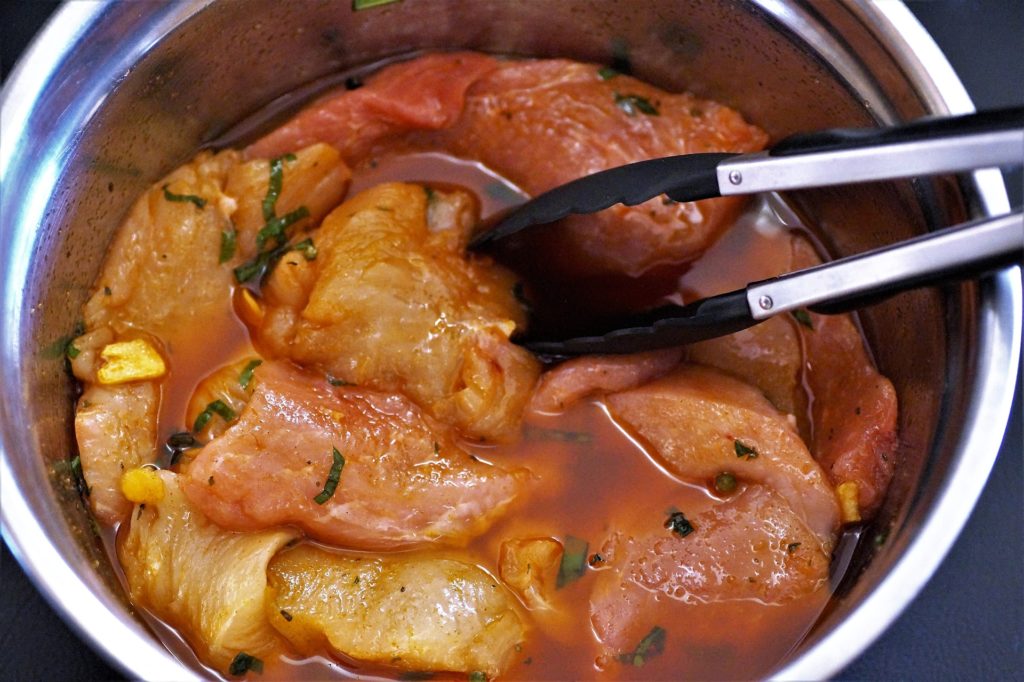
Margination is an important preliminary step when you are getting ready to cook chicken. Frankly, anyone can become an expert on marination once you have done it long enough.
As a rule, basic chicken marinade consists of cooking oil, olive oil, and an acid liquid, such as vinegar, lemon juice wine, and some spices. Marinate chicken for anywhere from 2 to 48 hours, with 6 to 24 hours being the standard. The whole chicken should be marinated for longer than its pieces because marinade penetrates parts more easily.
In this article, we shall see how to marinate chicken using different ways to make it flavorful and unique. The chicken marinade is primarily two types-dry and wet. Chicken marinated both ways make the meat tender, flavor-rich and moist.
What are marinades?
Marinades mix acid, oil, seasonings, and herbs to create juicier, tastier, and tenderer. Oils in the marinade make the meat sustain its moisture during cooking. The outcome is a juicier chicken.
Acids like vinegar or fruit juice, or lemon juice result in denser protein break down and tenderize the meat. Seasonings boost the flavor, and herbs add in aroma with taste.
With homemade marinades, you can skip the additives, preservatives, colorings, and low sodium and sugar with monosaturated fatty oils like olive oil. Apart from all this, marinating chicken minimizes the cooking time.
Two primary types of chicken marinades
The two primary types of chicken marinade are wet or dry. Both are suitable for different cooking types and equally delicious.
How to marinate chicken dry?
Begin with skinless, boneless chicken meat. Add in all your marinade powders and oil. There are many marinade powders you can purchase in your local grocery store or online.
They are often called chicken rubs or dry chicken rubs because you will rub that powder all over the chicken before cooking. They range from garlic or exotic herbal, from chile spicy to gentle laurel leaf rub powders, and from salt to cumin or paprika. You can even make one yourself at home. You can also use chicken seasoning with it or instead of a rub.
Purchase or make a dry mix and rub over your chicken. Coat nicely all over the chicken to make a coat of marinade over it.
Please note that dry rub or seasoning does not tenderize chicken as much as a wet marinade.
Therefore, you can use dry ingredients mixed with oil or butter to make chicken more tender. Or put a layer of rub or seasoning, and then a layer of oil or butter on top of that. The dry ingredients will remain stuck on the chicken as a coat enhancing the flavor of the chicken in the process of marinating the chicken.
Place the chicken in a ziplock bag, place the rubbed-over marinade chicken pieces into it, and refrigerate for 1 to 12 hours depending on your chicken and marinade type.
When you remove it for grilling or cooking, or broiling, you need to pat dry appropriately to get an even crunchy golden-brown crust.
How to marinate chicken wet?
Marinating chicken wet is a more common way. To marinate chicken wet, you must combine all the wet and dry ingredients in a zip log bag and shake well to blend them well.
A wet rub forms a liquid base with spices and herbs. The liquid moisturizes the chicken and makes it juicy and tender. This way, you add more flavor to your chicken.
Now place your chicken pieces in the bag and seal the bag. Now shake them and rub them with the dressing or marinate thoroughly.
Refrigerate them for one hour to 12 hours as per your marinade and chicken type.
When you grill or broil or use the stove for cooking, remove the pieces and place them over the plate or grill. Turn on both sides to cook. Check for the internal temperature to 165 deg F using a meat thermometer and then remove once it is cooked.
The difference between marinating chicken dry or wet is just the choice of dry and wet ingredients. With wet, you moisturize chicken and make it juicy, tender, moist, and soft. With dry, you get a crunchy, golden brown, and flavorful surfaced chicken. Both the marinades make your chicken delicious and lower your cooking times.
Useful tips for marinating chicken
The easiest way to marinate chicken wet is by putting it into salted water for at least 30 minutes. It will help to tenderize chicken meat, but chicken will be slightly salty.
Another easy and common way is to use vinegar or only plain lemon water. You can use any citrus or even wine. The goal is to create an acidic liquid that will tenderize chicken meat before cooking. Below we describe more exciting ways to marinate chicken.
Trick: You can use some wet dressing sauce for a chicken to marinate it too. Note that dressing will give its intense flavor to chicken in the process. Pick one type of dressing that you like to make sure that you will enjoy the taste of your marinated chicken.
The purpose of marination is not to kill bacteria but to tenderize and favorite chicken meat for easier cooking and more enjoyable consumption. Do not eat raw chicken even if you marinated it thoroughly.
How do marinades work?
Marinades are for surface flavors and do not penetrate the chicken. Therefore when you marinade, you should make the most of your marinade with the help of slashes over your chicken.
Make medium surface cuts with a sharp knife. This gives the marinade more area of the surface to penetrate and for the marinade to work deeply. Marinating this way will also enable the chicken to cook faster.
Different marinades work differently and give a unique flavor on the surface. Barbequing, grilling, roasting, and pan-frying will transform this marinade into a golden brown crunchy or smoky crust. It gives a unique texture, flavor, and taste.
Important tips from USDA
- When marinating whole poultry (chicken) or chicken parts, immerse the chicken entirely into the marinade.
- To make chicken marinate better, use a knife to make cuts in the meat, and use a fork or knife to make holes to allow the marinade to penetrate the chicken.
- Marinate chicken in the fridge. DO not marinate for longer than two days.
- Use food-grade plastic bags to marinate chicken – this will make cleaning easier. Discard the bags after marinating.
- You can also use stainless steel or food glass, or plastic containers.
- DO NOT re-use marinade that you used on raw poultry unless you boil it to destroy bacteria. DO NOT use a left-over marinade.
1. Chicken – how long to marinate?
Generally, you can marinate chicken for anywhere from 10 minutes to 24-48 hours. Longer than 24-48 hours is not recommended. An overextended marination period may break down chicken meat and ruin the structure, taste, and flavor. The chicken will become too mushy.
You all know that marinading is done before cooking. Chicken is marinated to increase its flavor and for tenderizing the meat. How long the chicken should be marinated depends on which part of the chicken you are marinating. If you are marinating whole chicken then, the marination time can go for about 12-48 hours.
If you are doing chicken pieces marination in a rush, then as short as 2-5 hours can work.
On average, chefs usually marinate chicken for 6 to 24 hours. You should keep marinated chicken in the fridge if you expect to marinate it for longer than 1-2 hours.
Chicken meat is a light protein that is thin and has a less dense structure than pork or beef. Therefore, it might not take such a long time to marinate chicken to penetrate every meat section. Another aspect of marinating time is the marinate type and chicken type as well.
As per USDA, you can marinate a chicken in the fridge for as long as 2 days. It is borderline and not a number to determine flavor. Leaving chicken in acids for long can make the chicken tougher and denser or, on the opposite, make it too mushy.
When the chicken marinates in an enzyme-based marinade such as papaya, ginger, and pineapple, the enzymes break the protein down, turning it too soft to make it mushy.
Let’s take a look at how long a chicken should be marinated based on its cut:
- Whole Chicken-Maximum 12 Hours, Minimum 4 Hours
- Boneless, Skinless Breasts-Maximum 2 Hours and Minimum 30 Minutes
- Bone-in, Skin-on Breasts-Maximum 4 Hours and Minimum 1 Hour
- Bone-in Skinless Thighs-Maximum 4 Hours and Minimum 1 Hour
- Skin-on Wings-Maximum 6 Hours and Minimum 2 Hours
- Skin-on Legs-Maximum 6 Hours and Minimum 2 Hours
2. BBQ chicken – how to marinate
Marinating a barbeque chicken makes a delicious, juicy grilled chicken. It will enhance the flavors of the marinate deep within the chicken while giving a smoky, crunchy flavor outside.
Ingredients
- Ketchup- 2/3 cup
- Light brown sugar- 1 tbsp
- Worcestershire sauce- 1 tbsp
- Apple cider vinegar- 1 tbsp
- Grated garlic- 1 clove
- Paprika- 1 tsp
- Ground cumin- 1 tbsp
- Black pepper-Freshly ground
- Kosher salt
Directions for marination
- Combine Worcestershire, sugar, ketchup, vinegar, paprika, salt, garlic, and pepper in a plastic bag.
- Use a resealable bag.
- Place four chicken breasts- boneless and skinless types, or place 8 skinless, boneless chicken thighs.
- Seal the plastic bag after squeezing the air out. Seal tight.
- Massage the marinade gently over the chicken to coat the chicken all over.
- Now place the bag in the refrigerator for at least two hours.
- BBQ the marinated chicken.
- Freeze for a month at maximum if you do not want to use it right away as a part of your meal prep.
How to cook frozen marinated chicken
Defrost the frozen marinated chicken overnight in the refrigerator and then cook. You can cook by removing the chicken from the bag and grilling it over indirect heat or by boiling on the stove or baking it in the oven.
Cover it until cooked inside out. Lightly char it and remove it when the core temperature reaches 165 deg F.
3. Chicken marinated in Italian dressing
The typical Italian dressing marinating also benefits as a salad dressing. It makes the marinating process effortless by creating a two-in-one sauce.
Italian dressing gives a unique Italian flavor to the marinated chicken. It prevents the meat from becoming chewy and dry and makes the chicken juicy, tender, and acts as a preservative. This way, you also minimize your cooking time.
Ingredients
For Italian dressing
- White wine vinegar- 1 to 4 tbsp, depending on how you like it
- Garlic- 2 cloves
- Extra virgin olive oil- 2 tbsp
- Dijon mustard- 1 tbsp
- Sugar -1 1/2 tsp
- Salt -1 tsp
- Black pepper
For marinating
- Italian dressing
- Additional Olive oil- 1/2 tbsp
- Mixed Italian herbs dried such as thyme, basil, oregano, parsley, and rosemary- 2 1/2 tsp
- Dried red chili flakes- 1 tsp
- Chicken thighs or breast or boneless skinless-1.5lb or 750 g
Directions for marinating
Place all the ingredients for dressing in a jar and mix well. Add for marination place ingredients in a sealable bag.
Pour at least 5 tbsps of dressing in it and mix well. Now add in chicken pieces and coat well. Set them aside for at least 20 minutes to 3 hours, up to 24 hours maximum.
To cook
You can either barbeque grill or cook on the stove without any oil. Brush some oil on the grill on a stovetop, or you can skip. Cook thoroughly on both sides until the meat gets light brown, and inside the meat, the temperature reaches at least 160 degrees F.
4. Chicken marinated in buttermilk
Marinating chicken in buttermilk, preferably full-fat buttermilk, makes the chicken soft. It enhances its flavor and tenderizes it.
The buttermilk is acidic, and which breaks down the chicken meat protein structure. This makes the chicken less chewy post 24 hours of marination. Chicken retains more moisture this way.
Ingredients
- Buttermilk- 1 1/2 cups
- Garlic powder-1 tbsp
- Dried Italian Seasonings-1 tbsp (of your choosing)
- Ground red pepper-1 tbsp
- Coarse salt- 2 tbsps (often people, including me, incorrectly call it “kosher” salt.)
- Bone-in chicken- 3lbs.
Directions for marination
Take a small bowl, whisk garlic powder, red pepper, salt, seasonings in buttermilk, and blend well. Pour this buttermilk mixture into a plastic sealable bag. You can also pour it into a large baking dish and dip the chicken in it.
Coat the chicken well by tossing around. Refrigerate it for about 2 hours or overnight. Turn the chicken periodically. Eliminate the chicken from the fridge 30 minutes before grilling.
Cooking
Heat grill to a flame on medium or low. Put the chicken on the grill after discarding the marinade.
Cover and cook the chicken by turning it over occasionally. Cook until it is cooked through and golden brown or reaches at least 165F degrees. It will take around 30 minutes to 60 minutes.
5. Chicken marinated in pickle juice
When chicken is marinated in pickle juice, it can enhance the texture and flavor in a big way. Note that the low-fat content can dry out quickly if you overcook it after marinating this way.
But chicken in pickle juice marinates in a shorter time, sometimes as little as one to two hours. The chicken will be succulent, tender, and super juicy.
The flavor is fantastic, and when the pickle juice is mixed with coconut flour and spices mixture to sear it to perfection, you make it tasty, moist, and juicy.
Ingredients
- Boneless and skinless chicken thighs- 8
- Dill pickle juice-1/2 cup
- Egg- 1
- Coconut milk- 1 tbsp
- Coconut flour- 3 tbsps
- Garlic powder- 1 tsp
- Onion powder-1tsp
- Paprika -2 tsp
- Pepper -3/4 tsp
- Salt-3/4 tsp
- Ghee or substitute- 2 tbsp
Directions
- Place chicken thighs in a ziplock bag and pour the dill pickle juice over this chicken.
- Shake the bag after sealing it tightly.
- Refrigerate it for around one to two hours. Do not leave it overnight.
- Whisk coconut milk and egg in a small bowl.
- Open the bag and pour the contents of pickle juice.
- Now add in the coconut milk and egg mixture and coat the chicken.
- Let chicken stand so that its outer layers soak in this liquid.
- In another bowl, blend in garlic powder, paprika, coconut flour, salt, pepper, and onion powder.
- Open the bag, and the egg mixture should be poured out.
- Now add in the dry ingredients.
- Close the bag and rub the chicken with this dry mixture to make a nice, good coat over your chicken.
Cooking
Add in some olive oil in a skillet to cover the bottom, and then fry the marinated chicken thighs.
Cook for at least around 4 minutes on each side. Cook until each side is golden brown. Simmer the heat—Cook for 8 to 12 minutes with periodic flipping of your chicken over the skillet.
Check the internal temperature using a meat thermometer to 165 deg F. This is when the chicken is cooked.
Some other popular chicken marinades are:
- Mediterranean marinade where the ingredients included are olive oil, lemon zest/juice, garlic, oregano, dried red chili, and pepper.
- Tandoori marinade where the ingredients included are yogurts, garlic, ginger, turmeric, chili, and garam masala.
- Jerk marinade where the ingredients included are garlic, ginger, chili, thyme, soy sauce, brown sugar, and allspice.
- Teriyaki marinade wherein the ingredients included are honey or sugar, soy sauce, and mirin or substitute if you cannot find one. You can skip mirin if you do not like alcohol.
- Barbecue marinade wherein the ingredients included are garlic, wine vinegar, brown sugar, and paprika.
But you can marinate chicken in many other exciting ways. You can buy ready-to-use marinating liquid in a grocery store. You can use orange, apple, tomato, vegetable, pineapple, or pomegranate juice, for example.
The exciting part of cooking is that you can experiment in many ways.
Conclusion
Marinating is more straightforward than many people think, and now you can marinate chicken in at least several ways. The purpose of marinating is to make the chicken flavorful. Now we have shown you how to marinate chicken; you can marinate chicken dry and wet.
We suggest wet marination of meat. Wet marination tenderizes the chicken and enhances its flavor a great deal. The taste depends on how you make, how you cook, what type of chicken you are using, part or whole, what kind of marinade you are using, and so on.
Whatever the case may be, a marinade softens, make your chicken juicy, tender, moist, and flavor-rich. Happy marinating!
USDA and other sources: