
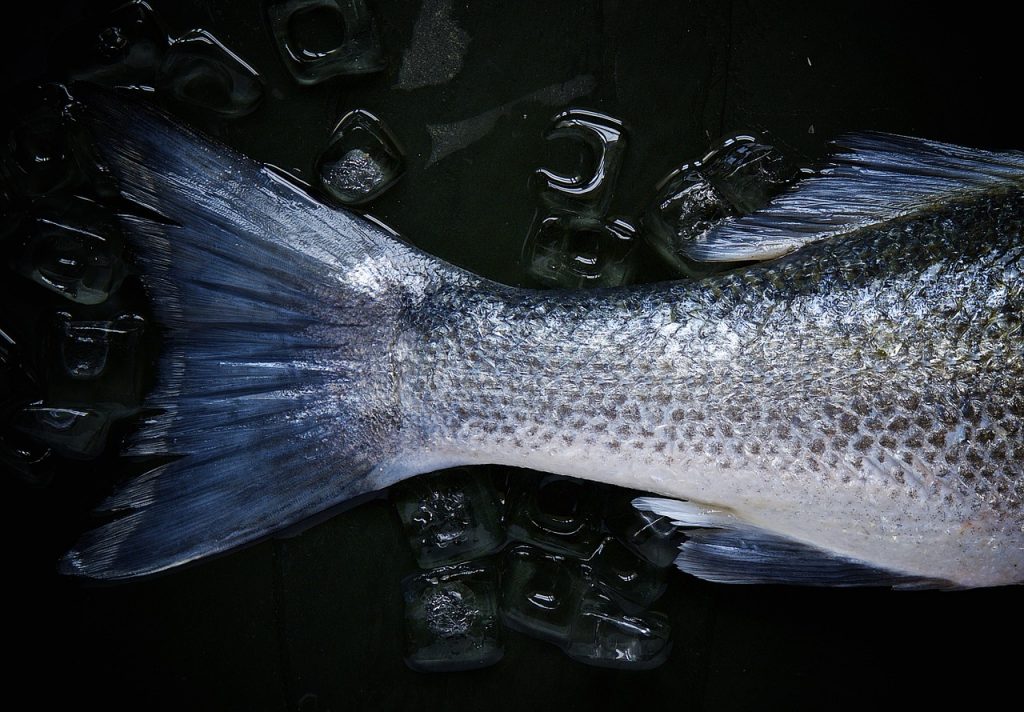
Should Fish Be Cooked Skin Side Down?
Cooking fish skin side down can get tricky. Fish skin is tasty and healthy in many ways. Should Fish Be Cooked Skin Side Down? Yes, you can keep the skin on and cook the skin side down. The skin gives a layer between grill/hot pan and fish flesh. However, cooking the fish skin side down depends on the fish type, family preference, and the cooking method. For a crispy fish, begin with Fish Cooked Skin Side Down until it becomes crispy. This makes it convenient to slide a spatula under the skin and not under the sensitive flesh. For the fish to avoid breaking apart, cook the flesh side first and then the skin side to avoid the curling of the skin.
Benefits of Cooking Fish Skin Side Down
- Has health advantages
- Makes an elegant fish
- A whole fish makes a gourmet meal.
- Fish fillets do not fall apart on the grill/pan.
The Factors That Affect the Fish Cooked Skin Side Down
Types of Fish- Cook the fillet with skin side down basically depends on the type of fish. For thinner skinned fish, like snapper or whitefish, you can cook skin down first and then the flesh side. The skin is delicate and very edible, so leaving the skin on is best. For a thicker and inedible fish skin like blackfish or grouper, it is best to eliminate the skin or the other method is to cook it with skin and then removing it after cooking.
Cooking method-Your cooking method also decides which side to be cooked first. When poaching fish fillets in a cooking liquid, the fish should be cooked with the skin down as the warm liquid makes the cooking of the fish more even. When you are grilling the fish or sautéing the fish, cook the flesh side down initially for a minute or two. Post this, turn and finish it with skin side down. This will shrink the flesh and avoid any skin curling.
What Does Skin Side Down Mean?
Skin side down means placing the fish skin side on the pan and cook. A fish cooked skin side down gives a proper cooked but not burned fish. It is not only delicious but keeps the fish flesh moist and protected from a burn. Ensure the skin side down on the pan over a stove is on medium heat. Ensure crispy fish skin by patting the fish skin dry with paper towels and cooking/grilling after it is at room temperature.

Is it Safe to Eat Fish with Its Skin?
Some individuals fear eating fish with skin. However, fish skin is safe to eat. It is often savored as a snack by many. The only criteria are appropriately cleaned fish and outer scales being removed. As per the FDA, fish should be consumed two to three times a week to about 113 g. Some fish can have high mercury, contaminants, and toxin levels including the skin. So, select low-mercury leveled fish for consumption.
Mercury levels and type of fish
- Low levels: cod, pollock, catfish, canned tunas, flounder, tilapia, and salmon.
- Mid-levels: grouper, mahi-mahi, carp, snapper, and halibut.
- High levels: marlin, swordfish, king mackerel, tilefish, and shark.
Fish skin is safe to eat and does not pose any risks to your health and certainly not more than the ones who are eating fish flesh.
Why Cook Fish with Skin Side Down?
Some fish skins are thick and do not taste good like tuna, monkfish, and swordfish. It is tough, thick, prickly, and stale. Barramundi and salmon skin is edible and thin. They are crispy and nice when cooked and can be eaten comfortably.
Some reasons to cook fish skin side down are:
- Cooking the fish skin side down will make the skin crispier.
- It is seen that when you put the fish skin side down, in the beginning, the fish skin cooks 2 times longer and is crispier.
- It is an insulator between flesh and pan heat to not make it dry and tough.
- Placing the fish skin side down to cook first can let you peel the fish skin off the flesh easily if you are not interested in eating the fish skin.
- Cooking skin side down renders the fat that is below the skin.
- When you cook the fish with skin, you can strip the skin once cooked through giving a juicy fish.
- You can cook the flesh part first and then cook the skin side down to avoid curling.
- You can cook the fillets with skin on to ensure the fillets falling apart on the grill or pan.
- It also adds to the appeal of serving the fish. It looks elegant in a serving with a wedge of lemon and parsley topped on it.
Pros and Cons of Eating Cooked Fish Skin
Some Health Advantages of Eating Cooked Fish Skin
- Fish skin is rich in omega-3 fatty acids that minimize triglycerides and minimize heart disease.
- Cooking fillets with skin retain oils and nutrients within the salmon which can otherwise be robbed in the process of making.
- Consuming fish skin ensures nutrients intake adequately like vitamin D, E, protein, iodine, omega-3 fatty acids, selenium, and taurine.
- Fish skin has building blocks of protein which contribute to a reduction of lower levels of iron, stunted growth, and body inflammation.
- Fish skin has transferrin and histones in its mucus that provides immunity.
- Fish skin provides skin health by offering vitamin E, omega-3, and skin collagen.
- Fish skin boosts the nutrients that you lose by eliminating the skin, mucus, and the layer adhering to the skin.
Disadvantages of Eating Fish Skin
- Some fishes are high in mercury levels and so their skin is equally toxic and unhealthy.
- Mercury exposure can result in health hazards like a decline in memory, fine motor skills, attention, dexterity, and other brain issues.
- Fish skin exposed to mercury due to contaminated water is not safe to consume.
- In fish, methyl mercury accumulates which is very toxic.
Long-lived and larger fish comprise of higher levels.
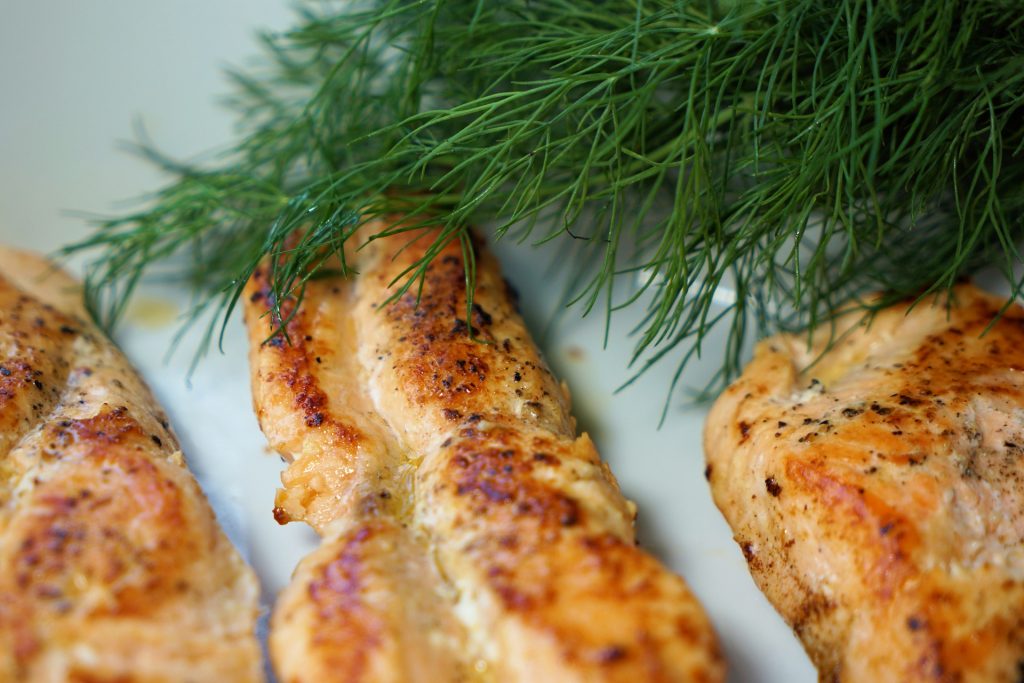
How to Cook Fish with Skin Side Down?
- If you want to have tasty fish with skin, you need to know to prepare it right.
- Try grilling or pan-frying with fish skin at a high temperature with skin side down for a crispy fish.
- Do not steam or boil the fish as it can make fish skin slimy and soggy.
- Fish skin can taste different with different types. Fish skin tastes delicious which includes barramundi, salmon, bass, snapper, flounder, and mackerel. Lesser tasty fish skin varieties include swordfish, monkfish, tuna, and skate.
- Fish skin is served either in fried forms or separately cooked and served as a side dish or appetizer.
- Fish snacks are cooked skin down and served as fish snacks, flavored fish snacks, salted fish, and deep-fried fish skin.
What Happens When You Cook Skin Side Down?
When you cook fish skin side down, it becomes crispy and acts as an insulator between the pot and fish flesh. To make the skin crisp, ensure that the fish skin is dry first. Remove excessive moisture that can transform into steam while cooking making the fish soft. A crispy fish skin makes it tasty to eat.
Follow these steps and tips to make fish skin crispy
- Pat the fish skin and the entire piece dry using paper towels.
- Scrape back the water droplets with the back of a knife to keep them moisture-free.
- The other way to eliminate moisture is salting the fish skin using coarse salt or sea salt flakes. You can make use of kosher salt and leave it for about 15 minutes.
- When salt is used, it draws any excess moisture from the fish skin. Scrape the salt off the fish skin and then pat dry.
- You can dust flour on the fish skin which can assist in getting a crispy fish skin. Dust some instant or all-purpose flour on the fish skin. Brush the excess as any extra flour will coat the fish skin with a layer.
- Ensure the oil and pan are hot or this can make fish skin stick and sweat instead of searing the fish skin.
- Make use of non-flavored vegetable oil and heat the pan with this oil on medium heat.
- Do not let the oil smoke, it should only shimmer.
- When the fish fillet is placed in the pan, it should sizzle.
- Don’t crowd the hot pan as the steam can make fish get soggy.
- Place the fish first the skin side down for a minute. Now, turn the heat down to avoid any fish skin burn.
- Heat should be simmering and turn as and when needed. Keep the fish gently sizzling on the pan.
- This will make fish skin crispy when released, however, give a minute on each side of the flip.
- Avoid moving the fish fillets quickly.
For thicker fillets, move the fish to a baking sheet to cook in and out in the oven.
Conclusion
Fish skin is a nutritious section of skin. It makes it delicious and tasty. It is abundant in nutrients and consuming fish skin retains the nutrients during cooking. The nutrients in fish skin also have skin, heart, and health benefits. Fish skin is a culinary ingredient that is versatile and can be prepared in different ways. Fish can be cooked skin side down to make it crispy. The skin acts as a barrier between the hot pan and flesh without robbing it of its nutrients.